
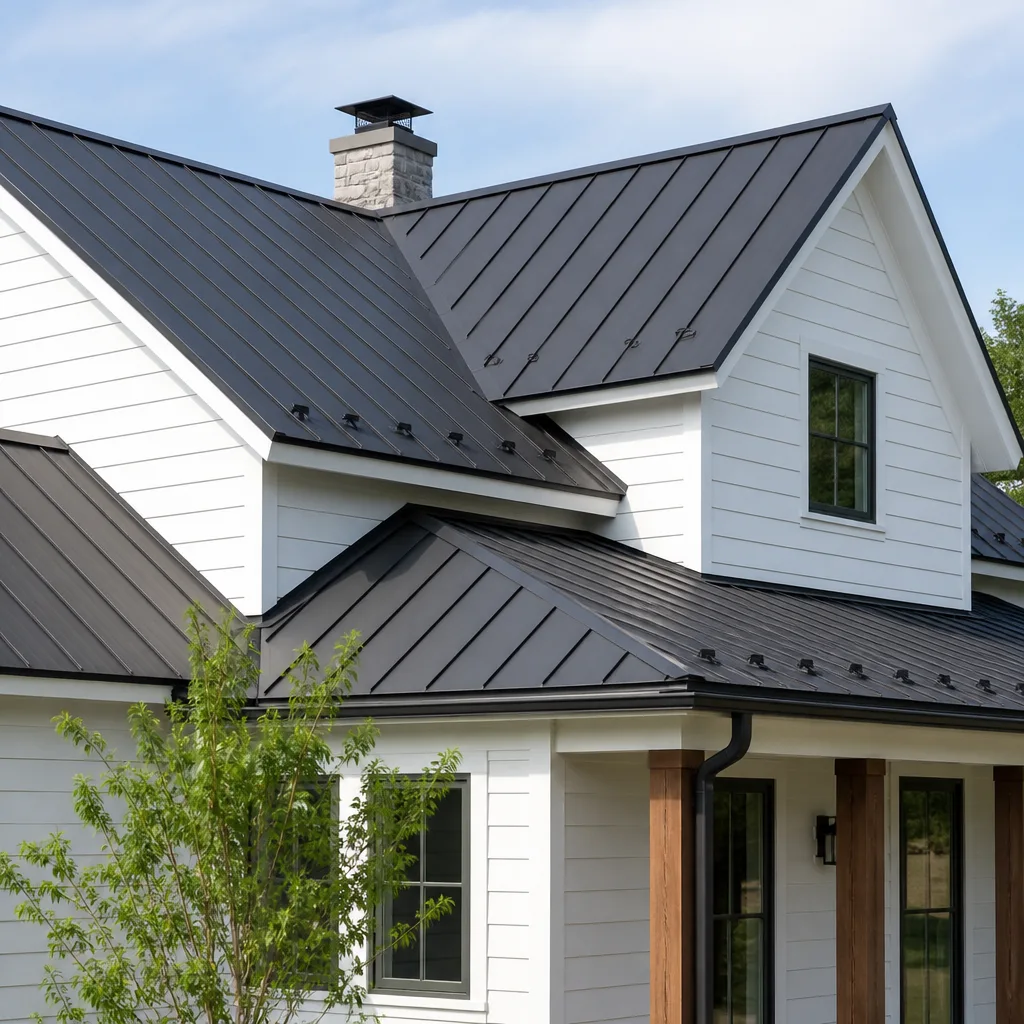
 Metal roofing
 Architectural shingles
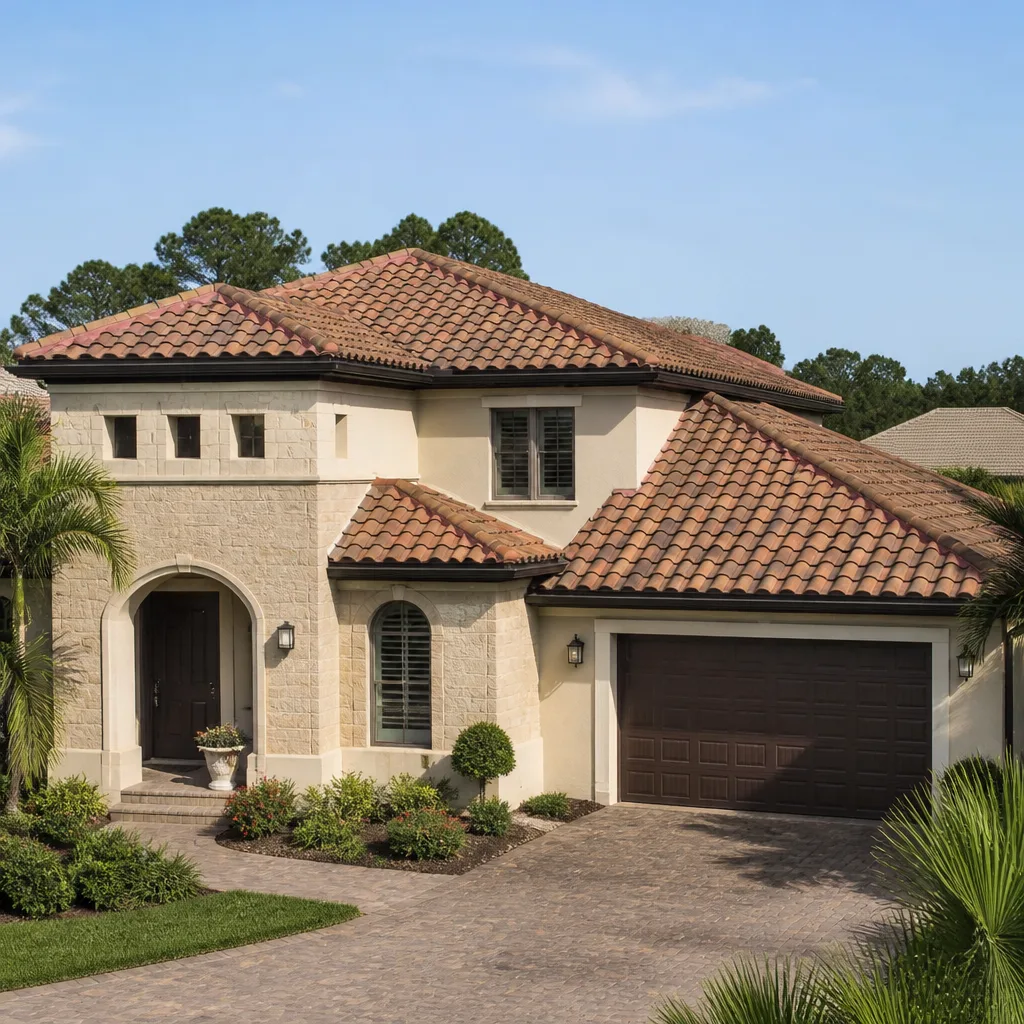 Tile roofing
 GAF
GAF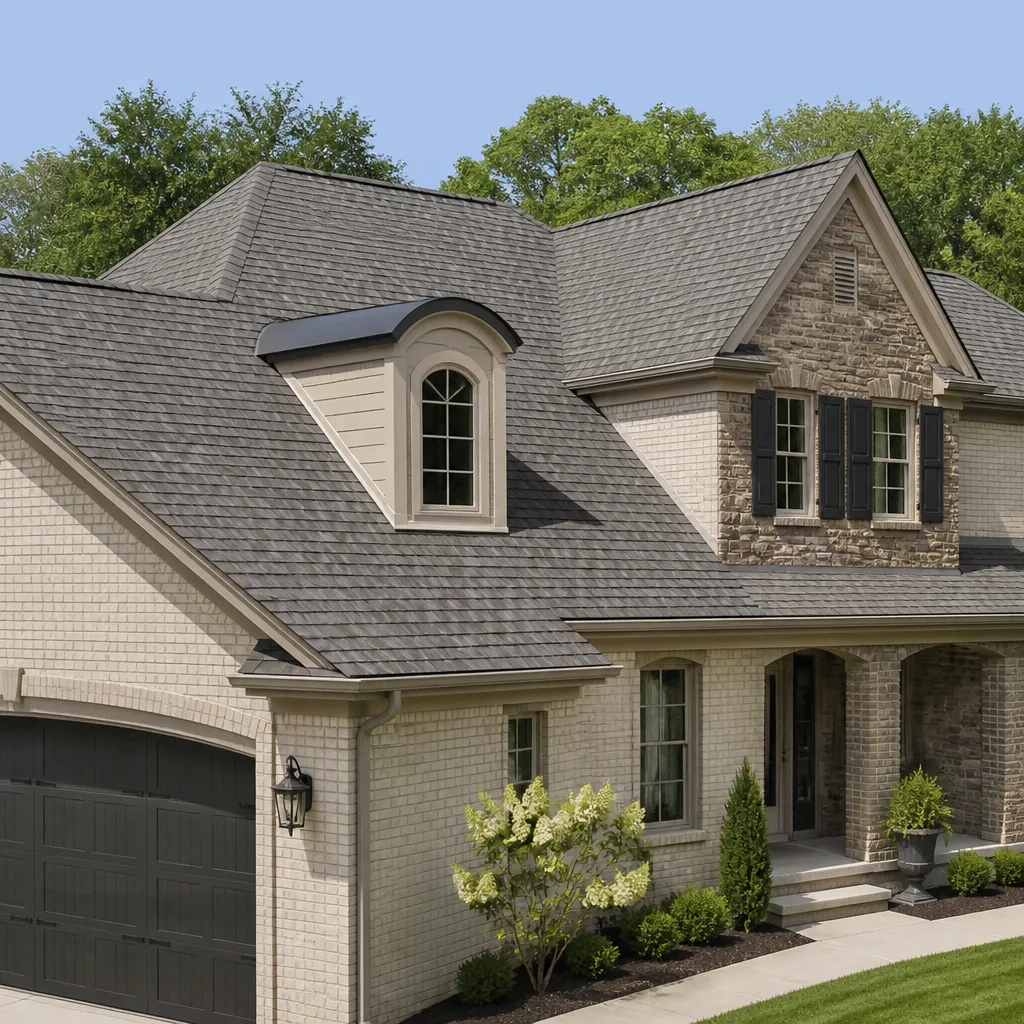 Owens Corning
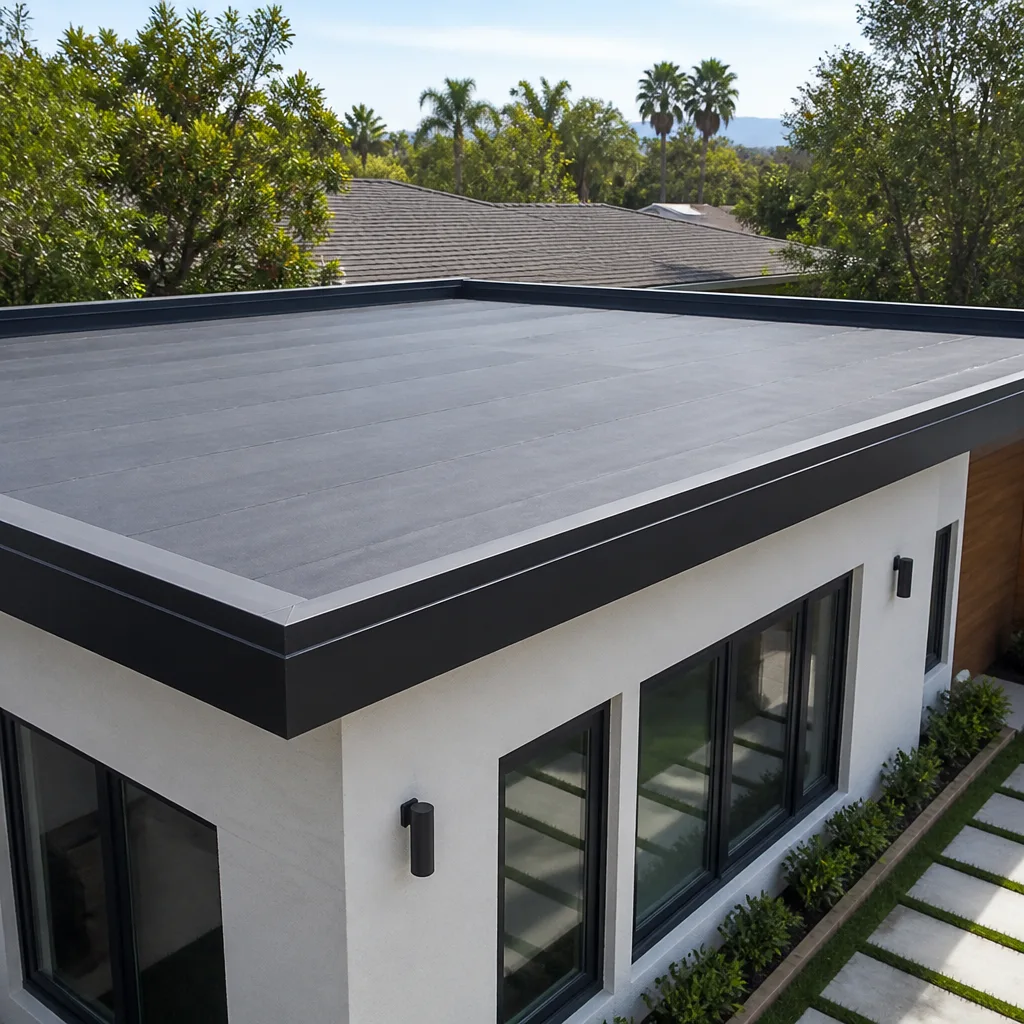 Flat & low-slope
Free roof inspection with deck photos before we talk money - GAF and Owens Corning certified installation
Atlas Flashing Replacement: The Fresno Owner’s Guide
Atlas flashing replacement in Fresno typically runs $275 – $650 installed, depending on whether we’re swapping a single pipe boot, a valley, or a full step-flashing run along a chimney or sidewall. We stock Atlas-compatible flashing on our trucks, so most single-penetration replacements happen the same day we diagnose the leak. The way most Fresno homeowners find us: a water stain on the ceiling that shows up after a hard rain, or granules collecting in the gutter below a wall junction and a slow drip they can hear in the wall cavity.
Atlas makes a solid roofing system, but flashing is where every roof eventually asks for attention. In Fresno, the heat does specific damage: UV breaks down the rubber collar on pipe boots, the alkaline dust from our soil works its way under metal laps, and repeated 100-degree expansion cycles can pull fasteners loose on step flashing. We replace the flashing, not just seal over it, because caulking a failed flashing is like putting a Band-Aid on a leaking pipe. Birchbark Roofing Fresno is an independent roofing contractor; we install and replace Atlas flashing but we’re not affiliated with Atlas Roofing Corporation.
Which Atlas Models This Applies To
If your roof was installed with Atlas shingles, the flashing was either Atlas-branded accessory line or a compatible aftermarket match, and both work fine as replacements. The flashing itself isn’t model-specific the way a car part is. What matters is the type of flashing and the penetration it protects. Here’s the compatibility map we work from every day:
- Atlas Pinnacle and Pinnacle Pristine roofs: These architectural shingles are thick, and the step flashing needs to rise at least 4 inches up the wall. Undersized 3-inch step flashing is the most common shortcut we see from the original install, and it’s the first thing that leaks in a driving rain.
- Atlas StormMaster and StormMaster Shake: These heavier profiles mean the flashing laps have to be hand-notched around the shingle profile. If the flashing wasn’t notched, water runs sideways under the shingle and shows up as a ceiling stain nowhere near the actual breach.
- Atlas GlassMaster and base architectural lines: Standard 26-gauge galvanized or aluminum step flashing works here. We recommend 26-gauge over the thinner 28 or 30-gauge stuff that gets bent out of shape by a determined Fresno squirrel.
- Atlas pipe boots and vent flashing: These need to match the pipe diameter, typically 1-1/2 inch, 2 inch, 3 inch, or 4 inch. The rubber collar on pipe boots fails from UV before the metal base ever rusts out. In Fresno’s sun, a rubber boot lasts roughly 8 – 12 years before it starts to crack at the base.
The OEM-versus-aftermarket question is simpler than most parts pages make it sound. Atlas flashing is built to spec and matches color exactly. Quality aftermarket flashing from a manufacturer like Oatey or Gibraltar performs just as well and costs 15 – 20% less on the part itself. We stock both and will tell you the price difference on the estimate. For color-matched step flashing in hard-to-match tones, we order Atlas OEM from our local supplier, and it’s usually in our hands within two business days.
Compatibility gotcha to know: Atlas pipe boots use a stamped aluminum base that’s rated for direct contact with Atlas shingles, including their algae-resistant copper granule lines. If someone installs a steel pipe boot against copper-granule shingles, the dissimilar-metal reaction will corrode the base in a few years. We always match metals to the shingle chemistry. That’s the kind of detail you won’t find on a generic roofing forum.
Styles & brands we work with
Signs Your Atlas Flashing Replacement Is Failing
- Ceiling stain below a wall, chimney, or pipe penetration: This means water is entering at the flashing and traveling along a rafter before soaking the drywall. The stain is never directly under the leak; water moves sideways. We trace it back to the true source.
- Granules from your Atlas shingles collecting in the gutter at a wall junction or valley: Flashing failure lets water run under the shingle, which accelerates granule loss in that area. If you see a bare strip developing right where the roof meets a wall, the flashing is the prime suspect.
- Visible gaps between flashing and the shingle surface: Heat expansion in Fresno summers, especially on south-facing exposures, can pull the nails or unzip the sealant beads on step flashing. If you can see daylight or a gap from the ground, water can get in.
- Cracked, brittle, or missing rubber collar on a pipe boot: The rubber degrades first, and once it’s cracked to the metal base, every rain puts water through the opening. This is the single most common flashing failure we see in Fresno, and it’s a 30-minute fix when caught early.
- Rust streaks under a flashing line on the roof surface: Steel flashing that’s lost its galvanic coating will rust, and the rust runs down the shingle. Even a pin hole in rusted flashing lets water through, and the problem accelerates with every wetting cycle.
If you’re in the Tower District, Fig Garden, or anywhere with older homes, add one more sign to the list: dried-out sealant around the original flashing laps. Those older homes often have galvanized flashing that was tarred or caulked repeatedly over three or four decades. The tar cracks, the water gets under it, and the repair that worked in 1998 stops working in 2026. Erik Lindgren has spent a lot of time on Tower District bungalows, and he’ll tell you the same thing he tells every customer: old flashing patched with old tar isn’t a roof system, it’s a countdown.
See the difference
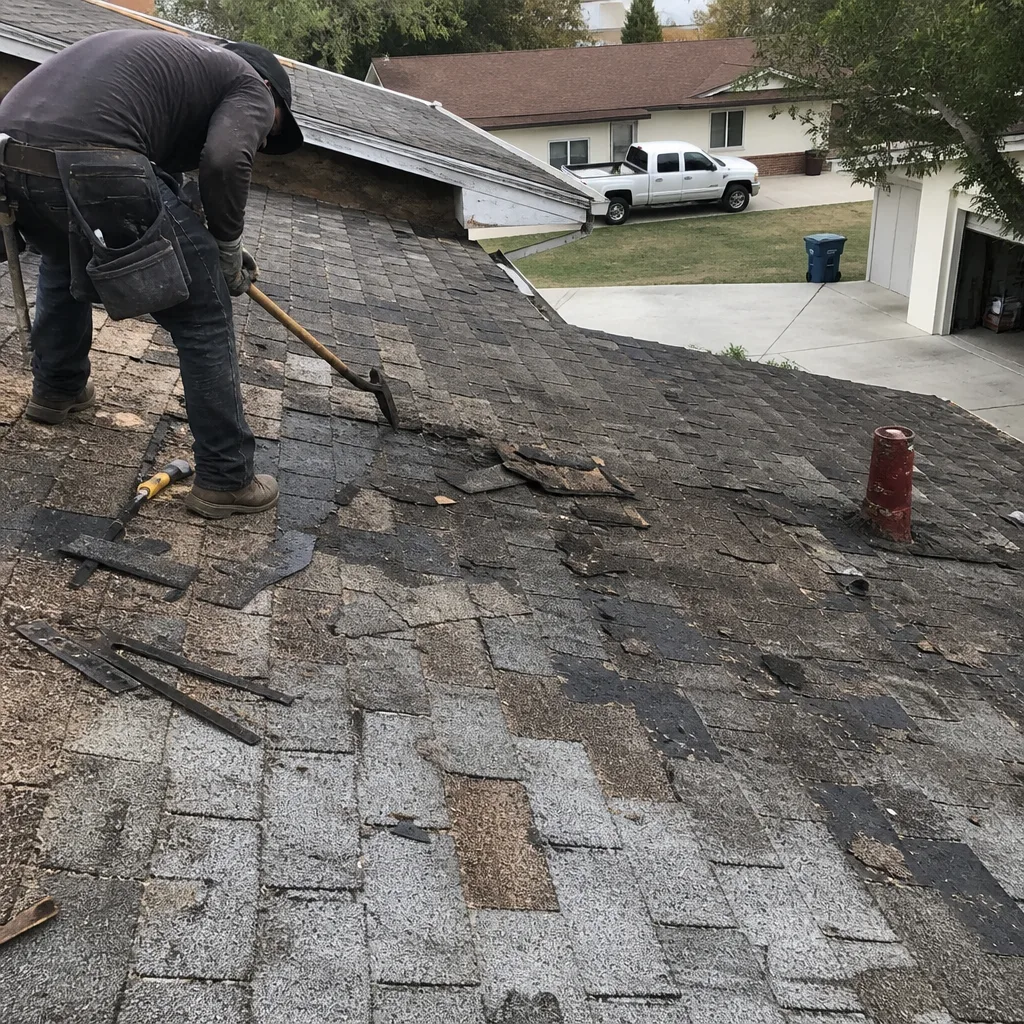 Before
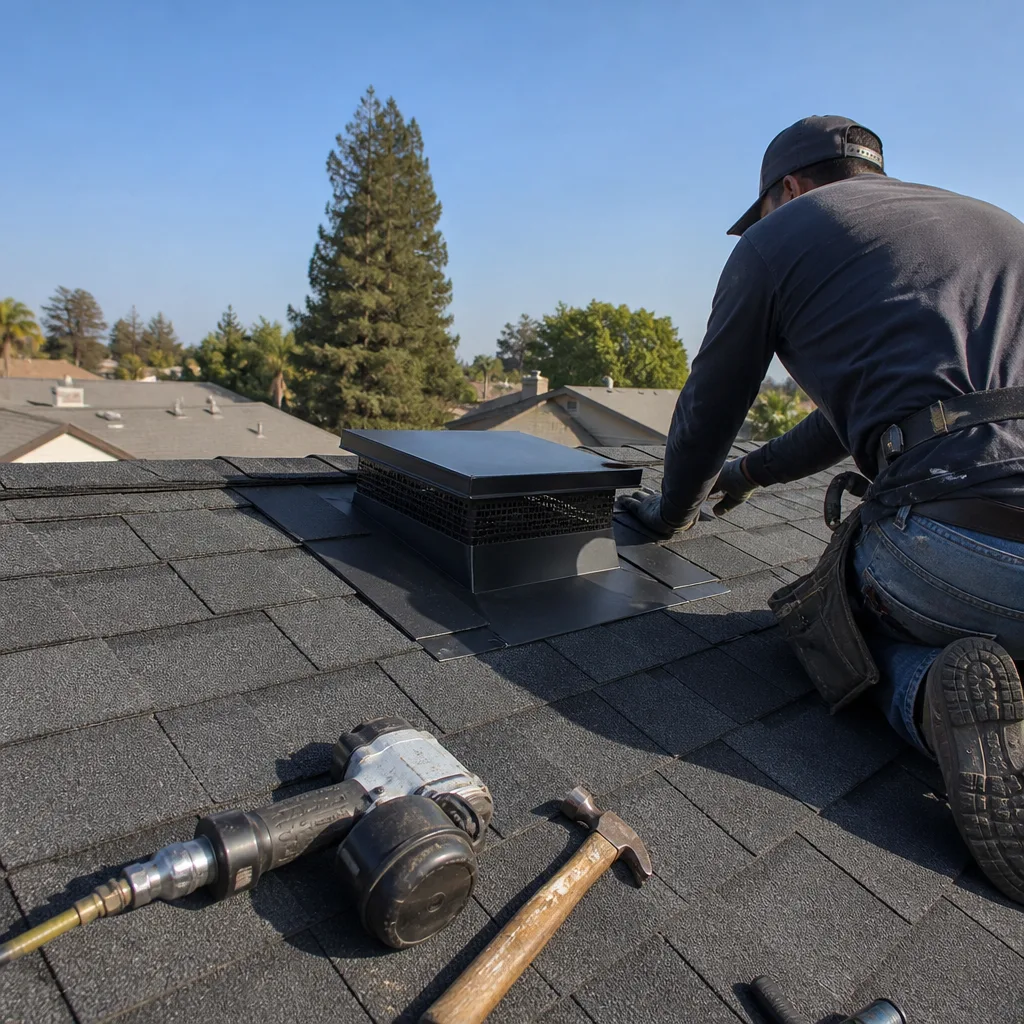 After
After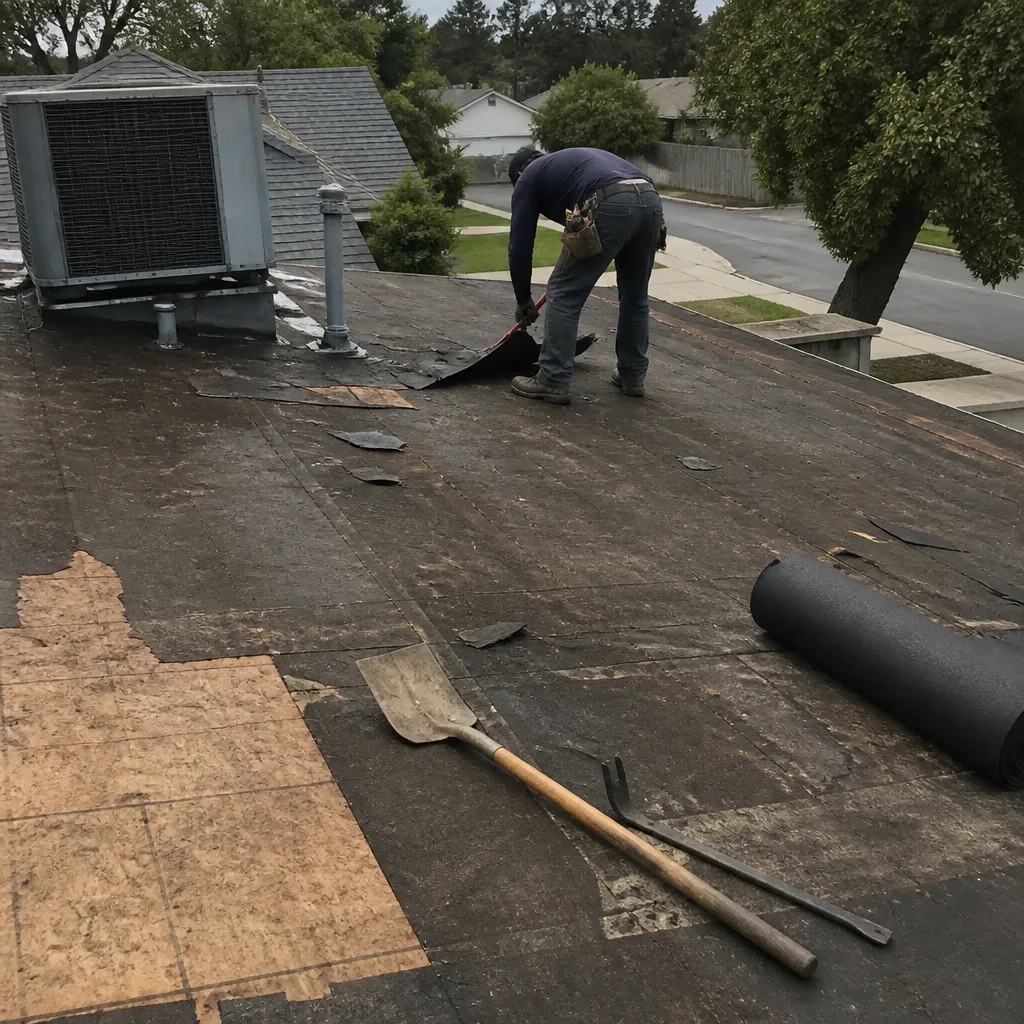 Before
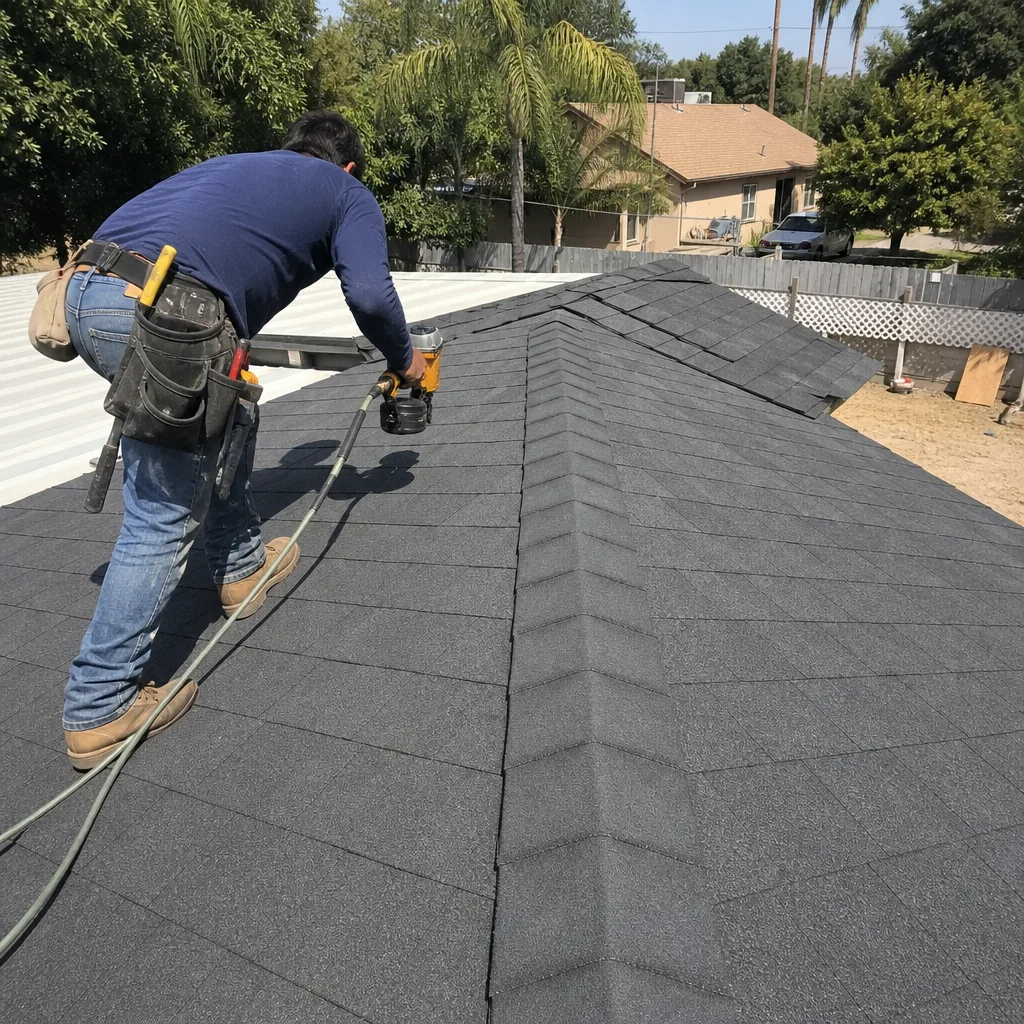 After
After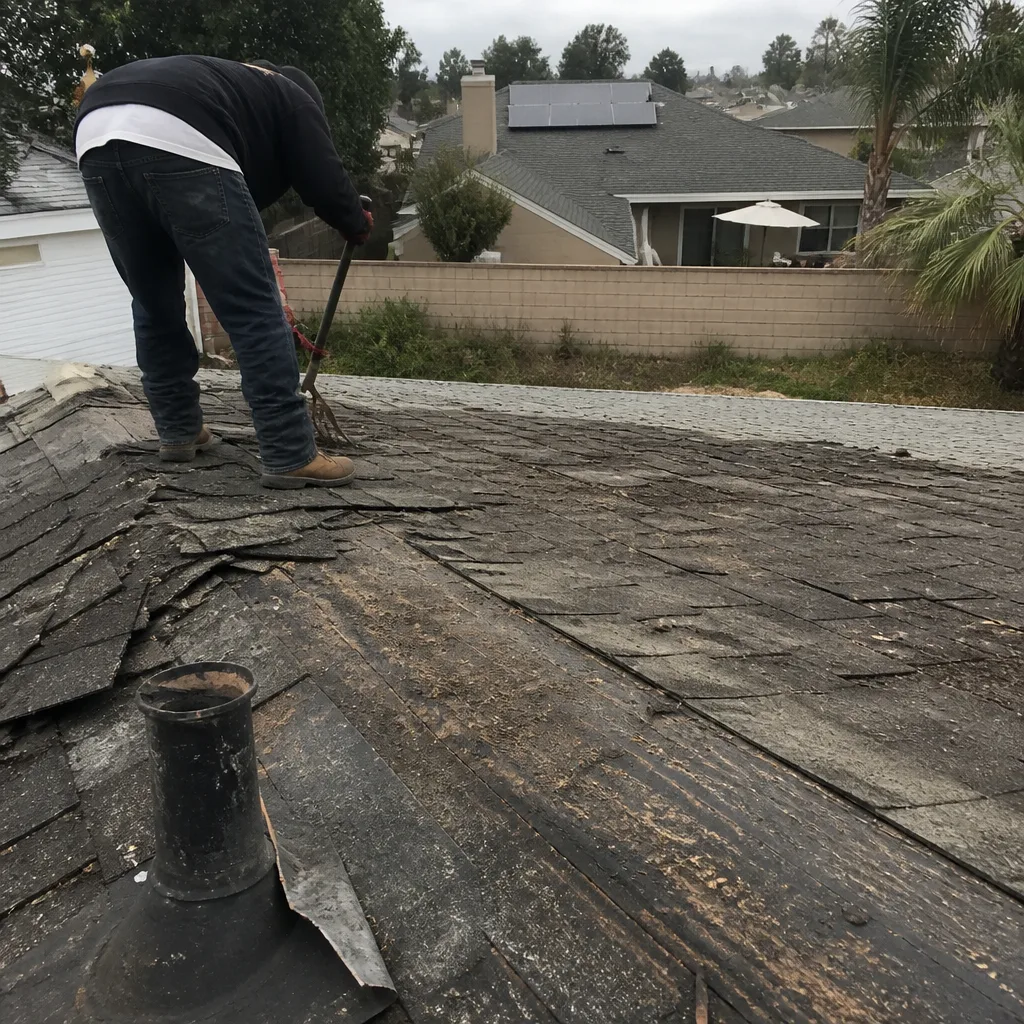 Before
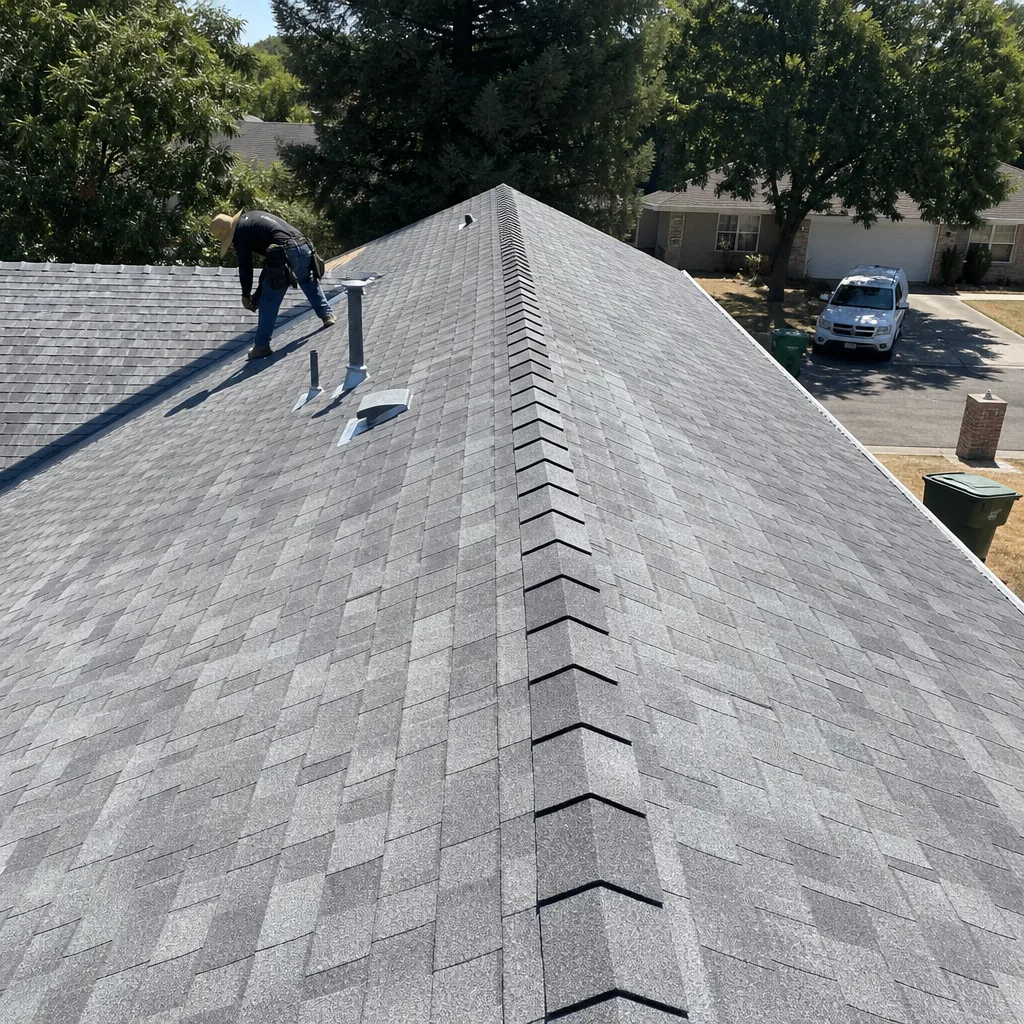 After
AfterReplacement Cost & What’s Included
Here’s what we charge in Fresno, with the caveat that your exact number comes in writing before any work starts:
- Pipe boot replacement (single penetration): $275 – $400. Includes new Atlas-compatible boot matched to your pipe diameter, removal of the old boot, and proper shingle re-seating around the new base.
- Step flashing replacement along a sidewall or chimney (up to 10 linear feet): $450 – $650. Includes new 26-gauge step flashing, counterflashing if the wall junction needs it, and new sealant at all laps.
- Valley flashing replacement: $500 – $800 depending on valley length and whether we’re replacing W-style metal or open valley liner inside an Atlas system.
- Chimney flashing rebuild (saddle, counterflashing, and step flashing): $800 – $1,600 depending on chimney size and masonry condition.
Every one of those numbers includes the parts, the labor, the cleanup, and our 365-Day Done Right Promise. If it leaks again within a year, we come back and make it right, no invoice. You’ll see the itemized price before we touch the roof; we don’t do change orders and we don’t do “while we’re up here” surprises. The price we hand you is the price you pay.
Call (559) 785-9461 and we’ll get you a written estimate. A live person answers, 24/7.
DIY or Call Us?
Flashing replacement is not inherently dangerous like a garage spring or live electrical, but it’s the repair where homeowner confidence does the most damage. The flashing usually looks fine from the ground. The failure is under the shingle, behind the wall covering, or at a lap that requires pulling shingles up to inspect. What you can safely check from a ladder: cracked rubber collars, obvious rust, separated sealant beads, and nail pops on flashing faces. If you see any of those, you know you have a leak path. What you shouldn’t do: climb onto the roof with a caulk gun and try to seal it from the surface. Surface sealing over failed flashing is a temporary stop that hides the leak long enough for rot to set in. By the time the stain comes back, the decking is wet and the repair triples in cost.
We’d rather you call first and let us diagnose it than spend a Saturday on the roof making it worse. The call is free. The estimate is free. (559) 785-9461.
FAQs
Pipe boot rubber collars last 8 – 12 years in Fresno’s UV, while the metal flashing itself will typically last 20 – 30 years if it was installed correctly and matched to the shingle chemistry. South-facing exposures wear faster. If you’re seeing symptoms at year 10 or beyond, the flashing has done its job and replacement beats repeated patching. Call (559) 785-9461 and we’ll give you an honest assessment.
Yes, in some cases: a separated sealant bead can be re-sealed, and a pulled nail can be replaced. But cracked rubber, rusted metal, and loose step flashing cannot be reliably patched. The patch always fails at the same spot, and the water damage keeps compounding while you wait. If you want a repair, we’ll quote it. If it’s not going to hold, we’ll tell you that too. Call (559) 785-9461 for an honest read.
A single pipe boot replacement takes 30 – 45 minutes from ladder up to cleanup. A full step flashing run along a wall takes two to three hours. A chimney rebuild can be half a day. Most Fresno homes are done before lunch, and we leave a clean-up photo before we go. Call (559) 785-9461 to get your exact timeframe on the estimate.
Yes. Our trucks carry Atlas-compatible pipe boots in all common diameters, 26-gauge step flashing, and counterflashing in standard colors. We also work with flashing for GAF, Owens Corning, and CertainTeed systems, so if you need a match for a mixed-brand roof, we have you covered. For non-stock colors or unusual sizes, we order from our local supplier with a two-business-day turnaround. Call (559) 785-9461 and we’ll tell you exactly what’s on the truck today.
Need Atlas flashing replacement in Fresno? Call (559) 785-9461 now. You’ll get a live person, a free estimate, and a written price before any work begins. We’ll walk your roof, identify every penetration that’s failing or close to it, and hand you a line-item quote that covers parts, labor, and cleanup. Shoe covers at the door, drop cloths through the hallway, and a photo of the finished clean-up before our crew leaves. That’s how we do every job in Fresno.
Written by Erik Lindgren, Owner, Birchbark Roofing Fresno at Birchbark Roofing Fresno, serving Fresno and nearby areas.