
Last updated October 17, 2026
 Metal roofing
 Architectural shingles
 Tile roofing
 GAF
GAF Owens Corning
 Flat & low-slope
Free roof inspection with deck photos before we talk money - GAF and Owens Corning certified installation
Roofing Company Maintenance Checklist for Fresno Homeowners
Most roofing maintenance checklists tell you to “check after storms.” That advice falls flat in Fresno, where we get roughly 11 inches of rain a year and nearly all of it arrives between December and March. The checklist that actually protects your roof happens in November, before the rain shows up, and again in late spring, after the wet season ends and the summer bake begins. This guide walks you through a month-by-month maintenance calendar built specifically for Fresno’s climate, the flat and low-slope roofs common on our ranch-style homes, and what documentation you need to keep your manufacturer warranty intact. We’ll also cover what a Roofing Company should put in writing after a maintenance visit so you have a paper trail for insurance and resale.
Styles & brands we work with
Quick Answer
A Fresno roof maintenance checklist should be timed around two windows: November (before the December – March rain season) and April – May (after the rains, before the 100-degree summer bake). The highest-value tasks are clearing gutters and scuppers in November, checking for lifted or cracked flashing after winter storms, inspecting flat-roof seams for thermal expansion damage in late spring, and documenting everything with dated photos. Skipping annual inspections, ignoring granule loss on shingles, or neglecting flat-roof ponding can void manufacturer warranties from GAF, Owens Corning, and CertainTeed.
Table of Contents
- Why Fresno’s Climate Demands a Different Maintenance Calendar
- The November Pre-Rain Checklist: What to Do Before December Hits
- The April Post-Rain Checklist: Catching Winter Damage Before Summer
- A Month-by-Month Fresno Roof Maintenance Calendar
- Flat and Low-Slope Roofs: What Fresno Ranch Homes Need After Summer
- Three Maintenance Items That Void Manufacturer Warranties if Skipped
- How to Document Your Roof Condition from the Ground with a Phone Camera
- What a Roofing Company Should Provide in Writing After a Maintenance Visit
- Common Mistakes to Avoid
- When to Call a Professional
- Frequently Asked Questions
- The Bottom Line
Why Fresno’s Climate Demands a Different Maintenance Calendar
Fresno’s roof damage doesn’t come from where most national checklists think it does. We don’t get hurricanes, we rarely get hail, and snow is a non-event. What we do get is relentless ultraviolet exposure, summer attic temperatures that regularly exceed 140 degrees, thermal expansion cycles that stress seams and fasteners, and a short but intense rainy season that finds every small gap you ignored all year. A roof in Fresno ages differently than a roof in Seattle or Chicago. The sun does most of the damage here, and the rain reveals it.
This matters because generic maintenance advice assumes the opposite: that water is the primary threat year-round and that spring and fall are interchangeable “checkup seasons.” In Fresno, the critical window is late fall. By the time rain arrives in December, you want every gutter clear, every flashing sealed, and every crack documented. After the rains wrap up in March or April, you have a second window to catch what the water exposed before summer heat makes repairs harder and more expensive.
We see this pattern every year as a Roofing Company in Fresno. November calls are about prevention: homeowners who want a pre-rain inspection, gutter clearing, and small repairs. April and May calls are about discovery: lifted ridge caps, cracked boot flashings, and flat-roof seams that opened up during the wet months. Both are smart times to act. The homeowners who skip both windows end up calling us in July with a ceiling stain and a much bigger problem.
The November Pre-Rain Checklist: What to Do Before December Hits
November is the single most important month for roof maintenance in Fresno. By Thanksgiving, you want your roof ready for the one stretch of the year when it will actually be tested by moving water. Here’s the exact checklist we recommend, in priority order.
- Clear every gutter and downspout. By November, our trees have dropped a full year of leaves, bark, and seed pods. A clogged gutter during a December rain storm sends water over the fascia and down exterior walls, and it backs up under the roof edge. If you have a two-story home, do this safely from a ladder or have a roofer do it. It’s the highest-value task on this list.
- Check scuppers and internal drains on flat roofs. Fresno ranch-style homes often have flat or low-slope sections with scuppers (wall openings) or internal drains. A single leaf clog in a scupper means standing water on your roof for the entire rainy season. More on flat roofs below.
- Inspect flashing around chimneys, vents, and skylights. Flashing is the metal or rubber material where the roof meets something vertical. After a summer of expansion and contraction, caulking cracks and neoprene pipe boots get brittle. Look for gaps, cracks, and lifting edges. This is where most Fresno leaks start.
- Walk the roof edge, or use binoculars from the ground. Look for lifted shingles, cracked tiles, or any area where the roof surface looks uneven. A shingle that’s lifted a quarter inch in November can become a tear in January.
- Trim branches that hang over the roof. December storms bring wind, and wind slaps branches against shingles and tiles. Leaves from overhanging branches are also the number one contributor to gutter clogs.
- Document everything with dated photos. Photos from November give you a baseline. If water damage shows up in January, you can point to a specific photo and say, “That looked fine in November.” Your insurer will appreciate it.
If you’d rather have a professional handle this, a maintenance visit before the rain costs far less than a repair visit after it-see our Roofing Cost Breakdown: The Fresno Homeowner’s Reference for 2026 for typical pricing. Most residential roof maintenance visits in Fresno run between $150 and $400 depending on roof size and what’s found. You’ll see your exact number in writing before any work starts with us.
The April Post-Rain Checklist: Catching Winter Damage Before Summer
By April, the rain has stopped and the damage it exposed is still fresh. This is the second critical window for Fresno homeowners. The goal here is different from November: you’re not preventing leaks, you’re finding the small failures that winter water revealed, before summer heat bakes them into bigger problems.
Start with the attic, even though it’s not technically part of the roof surface. In April, the weather is still cool enough to spend ten minutes up there. Look for water stains on the underside of the roof decking, around any penetration (plumbing vents, HVAC flues, skylight shafts). A fresh stain means water got in during the rainy season. An old stain with a dark ring means it’s been happening for a while.
Then move outside. Walk the perimeter of your home and look for these specific issues:
- Granule piles at downspout exits. If you see a measurable amount of asphalt granules collected at the base of a downspout, your shingles are losing their protective surface. Some granule loss is normal for any roof over ten years old. A heavy amount means the shingles are nearing the end of their useful life.
- Lifted or curled shingle edges. Winter wind and rain can lift shingles that were already bonding loosely. In Fresno, a shingle that’s lifted in April will harden in that position through the summer, making it harder to reseal later.
- New cracks in tile roofs. Concrete and clay tile roofs are common in Fresno. After winter wetting and drying cycles, hairline cracks can appear. A cracked tile isn’t always an emergency, but it does let UV and water reach the underlayment below, which shortens the roof’s life.
- Displaced gravel on built-up flat roofs. If your flat roof has a gravel surface, winter water can shift the gravel and expose the asphalt or coating beneath. Bare spots are where the next crack will form.
April is also a good time to schedule any repairs that the rainy season revealed, while temperatures are still mild. Roofing crews work more efficiently in 70-degree weather than in 105-degree weather, and sealants cure better in moderate temperatures. If you found something in April, don’t wait until August to fix it.
A Month-by-Month Fresno Roof Maintenance Calendar
Here’s the full year at a glance. Each entry is timed to when the task actually matters in Fresno, not a generic “spring cleaning” placeholder.
January – February: Monitor During Rain Events
During the wettest months, your job is observation. After any rain event over half an inch, do a quick visual check: any new ceiling stains, any water in the attic, any gravel or granules appearing at downspout exits. Don’t get on the roof and don’t attempt repairs during rain. Just note what you see and plan for a dry-weather fix. If you see active water intrusion, call a roofer immediately. A live person answers our phones around the clock, including during storm season.
March: Post-Rain Assessment Walk
Once the last meaningful rain has passed, do a full perimeter walk with binoculars. Look for anything changed, lifted, cracked, or displaced. Take photos. Open the attic hatch on a sunny morning and look for light leaking through the roof boards, which indicates a gap that water will find next year.
April: Repair Season Opens
This is the best month for roof repairs in Fresno. Temperatures are mild, rainy season is behind us, and any problems you found in your March assessment are still small. Schedule Roof Repair in Fresno now if you found lifted flashing, cracked tiles, or damaged shingles.
May: Pre-Summer Barrier Check
May is the last comfortable month before the heat. Check your attic ventilation: are ridge vents clear, soffit vents unblocked by paint or insulation, and bathroom fans venting to the outside rather than into the attic? A poorly ventilated Fresno attic to 140 degrees plus in summer, and that heat cooks shingles from below, cutting their lifespan by up to a third.
June – August: Thermal Expansion Monitoring
During the hottest months, your roof is under maximum thermal stress. Metal flashing expands and contracts daily, pushing against sealants. Flat roof seams stretch. You don’t need to get on the roof. Just watch from the ground for any new visible warping, and consider a July attic temperature check: if your attic is consistently above 150 degrees on a 100-degree day, your ventilation is insufficient and should be addressed before next summer.
September: Pre-Fall Gutter Prep
Before the leaves start dropping in earnest, make sure gutters are still attached firmly and sloped correctly toward downspouts. September is also when we recommend scheduling Roof Replacement in Fresno if your roof is nearing the end of its life, so the work is done before the rainy season.
October: Crack and Gap Sealing Window
October’s mild weather is ideal for re-caulking flashings, replacing pipe boots, and sealing any gaps found in your March inspection. Caulk and sealant need at least 48 hours of dry, moderate weather to cure properly. October gives you that window reliably in Fresno.
November: The Critical Pre-Rain Checklist
Everything from the November section above applies here. This is the month that determines whether your roof leaks in January. Clear gutters, check scuppers, fix anything that looks wrong, and document it all.
December: Rain Season Begins
The monthly calendar comes full circle. If you did the November work, December is mostly observation. If you didn’t, December is when you’ll find out, and repair calls during rain storms are both harder and more expensive. We answer emergency calls during rain events, but we would much rather see your roof in November than in a December downpour.
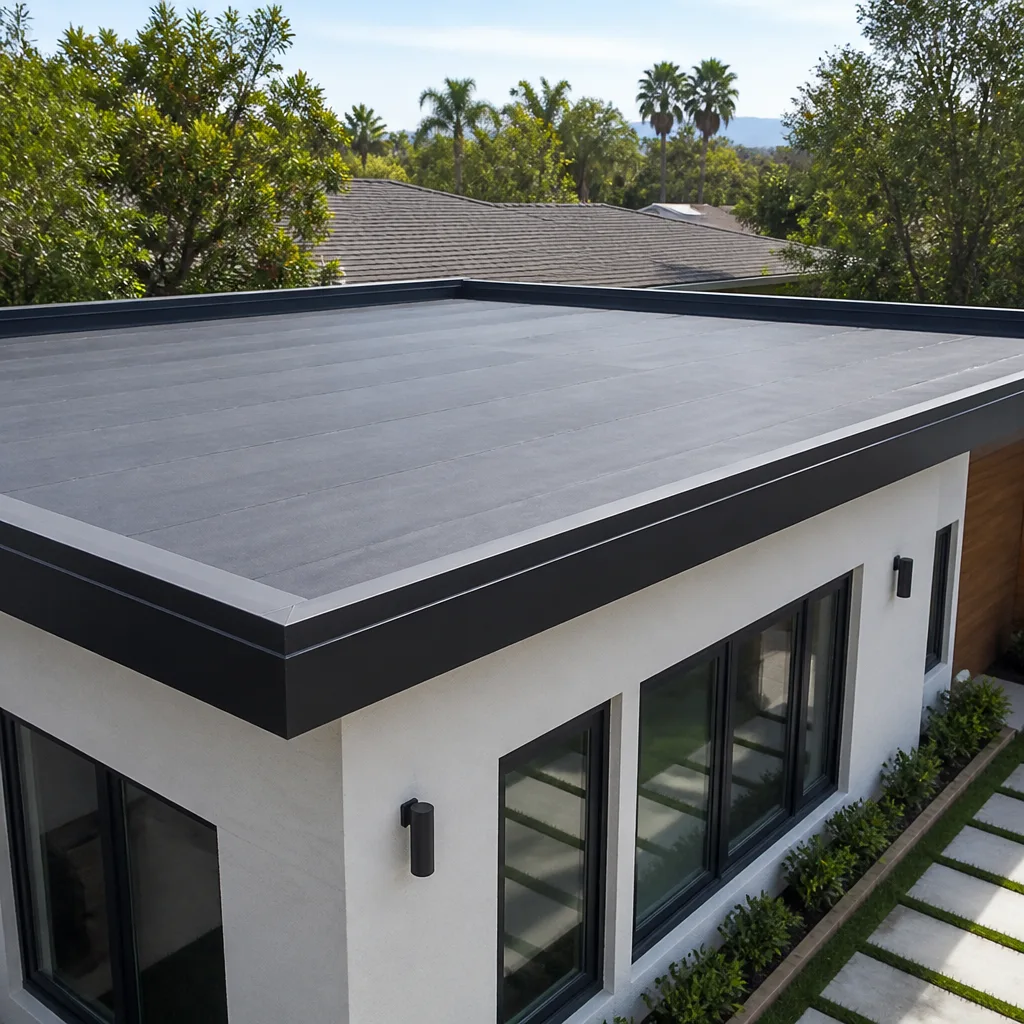
Flat and Low-Slope Roofs: What Fresno Ranch Homes Need After Summer
Many Fresno homes built in the 1960s through the 1980s feature flat or very low-slope roof sections, often over patios, carports, or additions. These roofs behave completely differently from pitched shingle roofs, and they need different maintenance attention, especially after a Fresno summer.
The issue is thermal expansion. On a 105-degree July day, a dark flat roof surface can reach 170 degrees or more. The roofing membrane (modified bitumen, built-up asphalt, or a single-ply like TPO) expands significantly. At night, it contracts. Over years of this cycle, three specific failure modes appear:
- Seam separation. Where sheets of membrane overlap, the adhesive or heat-weld bond can gradually pull apart. A seam that looked tight in October can show a visible gap by September. Winter rain will find that gap.
- Surface cracking or “alligatoring.” Built-up asphalt roofs in particular develop a pattern of fine cracks that looks like alligator skin. This means the asphalt’s flexible oils have cooked out of the surface, making it brittle. Once alligatoring appears, the roof has a few years left at most before widespread cracking lets water through.
- Flashing pulls away. Where the flat roof meets a parapet wall, chimney, or skylight curb, the flashing takes the brunt of expansion stress. Look for vertical cracks in the flashing surface and gaps at the top edge where it meets the wall.
In our experience across Fresno, these issues are easiest to catch in October and April, when moderate temperatures make the membrane more stable and easier to inspect. From the ground, look for any visible lifting at roof edges, new areas of bare asphalt without gravel, or standing water that hasn’t dried within 48 hours after rain. Standing water is a serious issue on flat roofs: it accelerates surface degradation and adds weight the structure wasn’t designed for. If you see ponding, call us to evaluate whether the roof slope needs correction or drains need clearing.
Three Maintenance Items That Void Manufacturer Warranties if Skipped
Manufacturer warranties on roofing materials are not unconditional. Brands like GAF, Owens Corning, and CertainTeed include maintenance requirements in their warranty language, and failing to meet them can void coverage. Here are the three items that matter most for Fresno homeowners.
1. Annual Inspections by a Qualified Roofing Professional
Most extended or lifetime warranties require some level of documented professional inspection on a regular basis. The exact requirement varies by manufacturer and warranty tier, but “we never looked at the roof for fifteen years and now there’s a problem” is a quick path to a denied claim. Keep a record: who inspected, when, and what they found. A written inspection report from a roofing company satisfies this requirement.
2. Timely Repair of Documented Issues
An inspection that finds a problem only helps you if you fix it. Warranty claims have been denied because a homeowner had an inspection report noting lifted flashing, chose to defer the repair, and then filed a leak claim two years later. The manufacturer’s position is that the homeowner failed to mitigate documented damage. When an inspection finds an issue, repair it.
3. Adequate Attic Ventilation
This is the big one, and it catches more Fresno homeowners than any other warranty requirement. Shingle warranties from GAF, Owens Corning, and CertainTeed all include ventilation requirements. The reason is simple: shingles installed over an inadequately ventilated attic run hotter and fail faster. In Fresno’s summer conditions, a poorly ventilated attic can reach 160 degrees, which cooks shingles from the underside. If you file a premature shingle failure claim and the manufacturer determines your attic didn’t meet ventilation standards at installation, your claim can be denied even if the shingles themselves were defective. The fix is to verify your attic ventilation meets the current building code (Fresno follows California Building Code, which requires a specific ratio of net free vent area to attic floor area-details in our guide to Roofing Permits, Codes & Inspections in CA: What You Need to Know) and keep that documentation.
Your paper trail for all three of these items should include: the inspection date, the inspector’s name and company, findings, and repairs completed. We provide all of this in writing after every maintenance visit, which is exactly what manufacturers want to see.
How to Document Your Roof Condition from the Ground with a Phone Camera
You don’t need to climb on your roof to track its condition over time. In fact, we’d rather you didn’t. Walking on a roof causes its own damage, and walking on a hot Fresno tile roof in summer can crack tiles and create the very problem you’re trying to document. Here’s how to get useful documentation from the ground.
- Set the date and time on your photos. Your phone does this automatically, but make sure it’s enabled. A timestamped photo is your strongest documentation for warranties and insurance.
- Take four consistent angles. Stand at the same four spots each time: front left corner, front right corner, back left, back right, far enough back to show the entire roof plane. Consistent angles let you compare the same view across months and years.
- Use the zoom to get detail shots. Modern phone cameras have strong optical zoom. Use it to capture specific areas you’re watching: a flashing joint, a crack in a tile, a lifted shingle. Zoom shots of small areas are more useful than distant shots of the whole roof.
- Photograph the gutters and downspouts too. Granule accumulation in gutters tells you about shingle wear. Take a photo after each major rain event showing what collected at the downspout base, especially if you see dark, sand-like material.
- Document after every rain event over half an inch. If you see something new (a lifted shingle, a displaced tile), take a photo immediately and note the date in your records.
- Keep photos in one album. A running “Roof Documentation” album on your phone, with photos in order by date, gives you a complete visual history to show a roofer, adjuster, or future buyer.
This ground-level photo habit is enough for most homeowners. If you want a more thorough inspection, including attic access or getting on the roof where safe, that’s when a professional service call makes sense.
What a Roofing Company Should Provide in Writing After a Maintenance Visit
Not all maintenance visits are equal, and the difference usually shows up in the paperwork. When you pay a roofing company to inspect and maintain your roof, here’s what you should receive in writing before the crew leaves your property.
- A written description of what was inspected. This should itemize each component: shingles or tile condition, flashing, gutters, ventilation, penetration points like vents and skylights, and any flat-roof areas.
- Photos of any damage or wear found. If the inspector says a flashing is cracked, you should see a photo of that flashing. This lets you verify the finding and track it over time.
- A clear list of recommended repairs with pricing. This should be itemized, in dollars, with no “we’ll figure it out later” language. We provide this as a written price before any work starts, every time.
- Documentation of maintenance performed. If gutters were cleared, drains checked, or minor sealant applied, that work should be listed with the date. This is the paper trail your warranty requires.
- Confirmation of cleanup. The crew should confirm in writing that the work area was cleaned and that no debris remains. At Birchbark Roofing Fresno home, this is standard: shoe covers at the door, drop cloths through the hallway, all debris cleared and photographed before we leave.
If a roofing company offers you a maintenance visit with no written report, treat that as a red flag. Verbal summaries don’t survive contact with an insurance adjuster or a warranty department. Written documentation is what protects you.
One thing that often surprises homeowners about our maintenance visits in Fresno: we treat the entire property the way we would treat our own homes. The Cedarwell Care Promise isn’t a stamp on a pamphlet, it’s our working standard. Clean up like it is our own home. Ask before we move or touch anything. Respect the family’s time and quiet hours. Explain the price before the work. These four values guide every visit, and our crews are background-checked and uniformed so you always know who is at your door.
Common Mistakes to Avoid
- Following an East Coast maintenance calendar. Fresno’s wet season is December through March. If you’re checking your roof “after the October rain” like a New England checklist says, you’re months early and there’s no rain to check after. Time your inspections to Fresno’s actual weather.
- Skipping the November gutter clear because “the trees haven’t dropped everything yet.” This is the most common one we hear. Clear gutters in early November, even if some leaves will fall later. A gutter with light leaf debris still drains. A gutter full of compacted wet leaves plus new leaves on top doesn’t.
- Walking on tile roofs. Concrete and clay tile roofs, common in Fresno’s older neighborhoods like the Tower District and Fig Garden areas, crack easily underfoot. Walking on them can cause the exact damage you’re trying to find. Stay on the ground.
- Ignoring small flashing gaps. A quarter-inch crack in chimney flashing is small enough to ignore. It’s also big enough to let water in during a December downpour, and that water will travel along rafters and show up somewhere far from the original gap. Small flashing problems never stay small through a rainy season.
- Deferring April repairs until “budget season” in fall. Summer heat widens cracks, hardens lifted shingles in their damaged positions, and makes repairs more extensive. The same flashing repair that is a $200 job in April can become a $1,200 leak remediation in November. Fix it when you find it.
- Not keeping maintenance records. If you ever file a warranty claim or make an insurance claim, the adjuster will ask for maintenance history. No records means a weaker claim. A simple folder of dated reports and photos is all it takes.
- Assuming a new roof means no maintenance. A new roof still has flashing, gutters, and ventilation. It still needs inspections. New doesn’t mean maintenance-free, and warranties from manufacturers like Owens Corning and GAF are built on the assumption that you’ll maintain the roof.
When to Call a Professional
Some maintenance tasks are safe for homeowners with a solid ladder and good judgment. Others aren’t. Call a professional roofing company in Fresno if you see active water intrusion (a ceiling stain that’s growing, water in the attic during rain), if a flashing gap is wider than a pencil, if a section of shingles or tiles is missing or displaced, if your flat roof shows standing water that hasn’t dried in 48 hours, or if you have any hesitation about getting on a ladder. Roof work is genuinely dangerous, and the injury risk of a fall outweighs any money saved. Birchbark Roofing Fresno offers free estimates in Fresno, including maintenance inspections, at (559) 785-9461.
Frequently Asked Questions
Once a year is the minimum, but twice is better in Fresno: once in November before the rainy season and once in April after it. The November inspection catches problems before water finds them. The April inspection catches what water exposed before summer heat locks the damage in.
Most residential roof maintenance visits in Fresno run between $150 and $400 depending on roof size, roof type, and what’s found. Gutter clearing alone is typically less. If repairs are needed, those are quoted separately in writing before any work starts. Call (559) 785-9461 for an exact quote on your home.
Yes, and here’s why: in Fresno, wind carries leaves, pine needles, and debris from surprisingly far away, and even a modest accumulation can clog a downspout elbow. Valley oak leaves in particular are small enough to pass through many gutter guards and compact into a sludge-like mass. Checking and clearing gutters before the rainy season is always worth it.
We strongly advise against it. Concrete and clay tile roofs are fragile, especially in hot weather when the tiles are brittle, and walking on them can crack tiles without you noticing. Use ground-level photos with a phone camera zoom, or have a professional perform the inspection. It’s safer and you won’t cause new damage.
Our maintenance visits include inspection of the roof surface, flashing, all penetration points (vents, pipes, skylights), gutters, attic ventilation, and flat-roof areas if applicable. You receive a written report with photos, findings, and itemized recommendations. Shoe covers, drop cloths, and cleanup are included, and we photograph the completed clean-up before we leave.
Homeowner’s insurance generally covers sudden, accidental damage like storm damage or a fallen branch, not routine maintenance like gutter clearing or inspections. However, documenting regular maintenance can help your claim if an accident does happen, because it shows the damage wasn’t pre-existing neglect. Call (559) 785-9461 if you need help determining whether the issue you’re seeing is a maintenance item or an insurance claim.
The Bottom Line
Fresno’s maintenance calendar is built around one fact that changes everything: our rain comes all at once, in a three-month window, and our heat spends the other nine months stretching and baking every seam, seal, and shingle on your roof. The homeowners who stay ahead of roof problems are the ones who clear gutters in November without waiting for a checklist from another climate, who document what they see from the ground with a phone camera, and who keep the paper trail that warranties and insurers expect. If you’d rather have a professional handle the inspections, Birchbark Roofing Fresno provides written reports, itemized pricing, and the 365-Day Done Right Promise on every job. For more guides & resources, visit our blog. Call (559) 785-9461 to schedule your free estimate.
Written by Erik Lindgren, Owner at Birchbark Roofing Fresno, serving Fresno since 2000.
See the difference
 Before
 After
After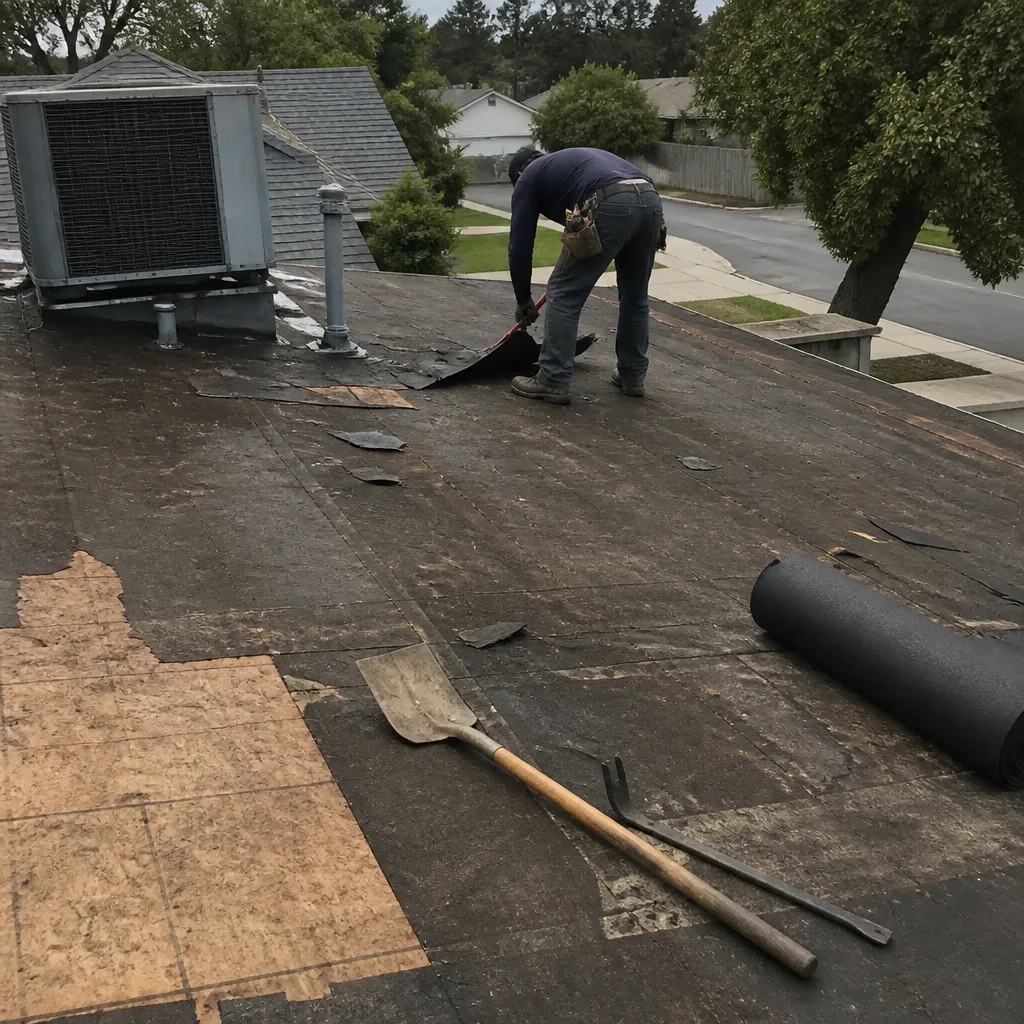 Before
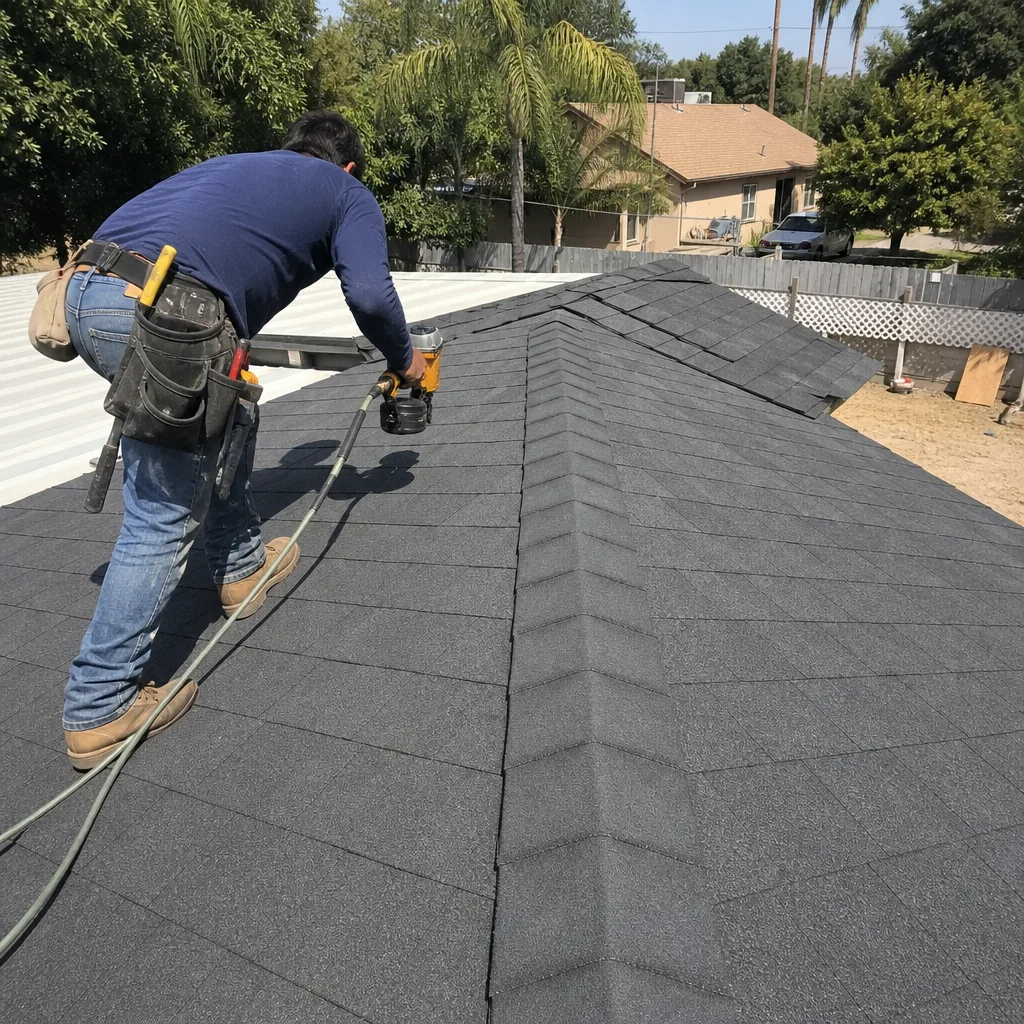 After
After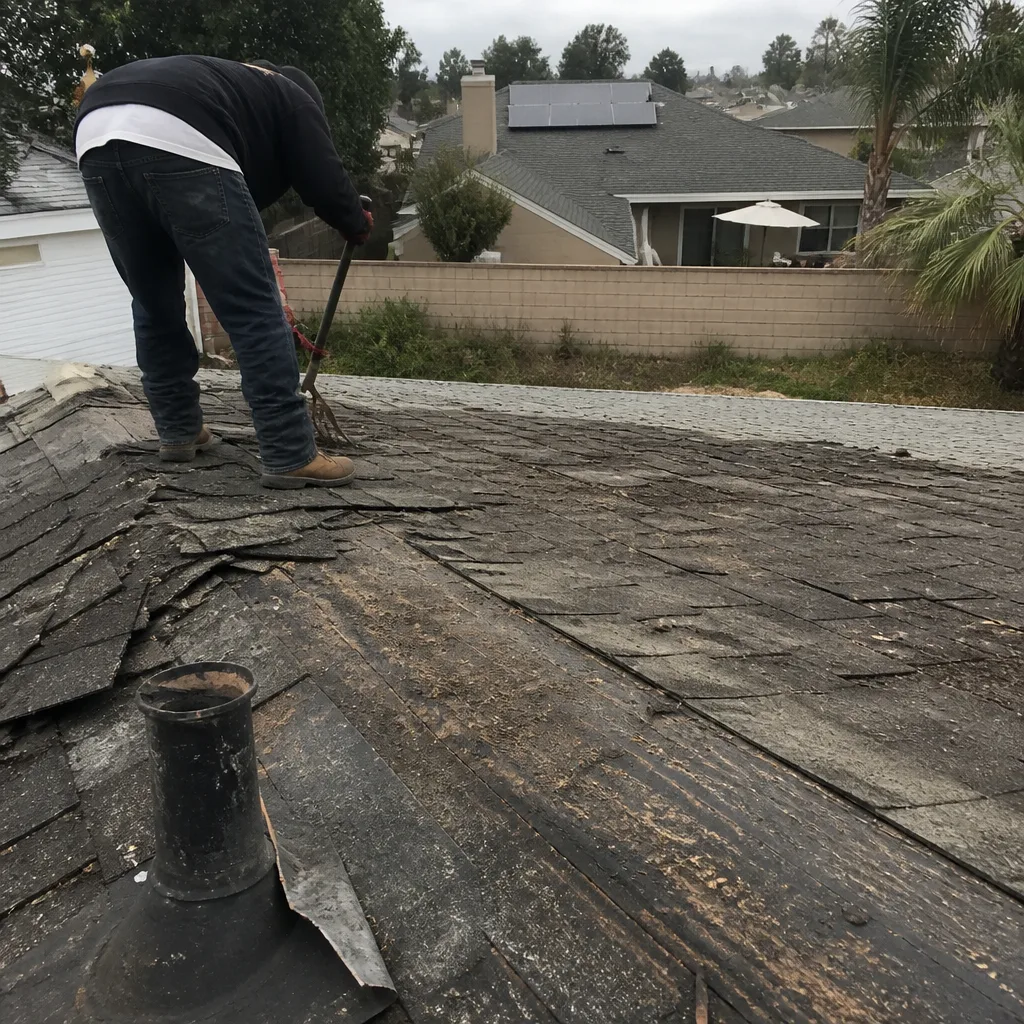 Before
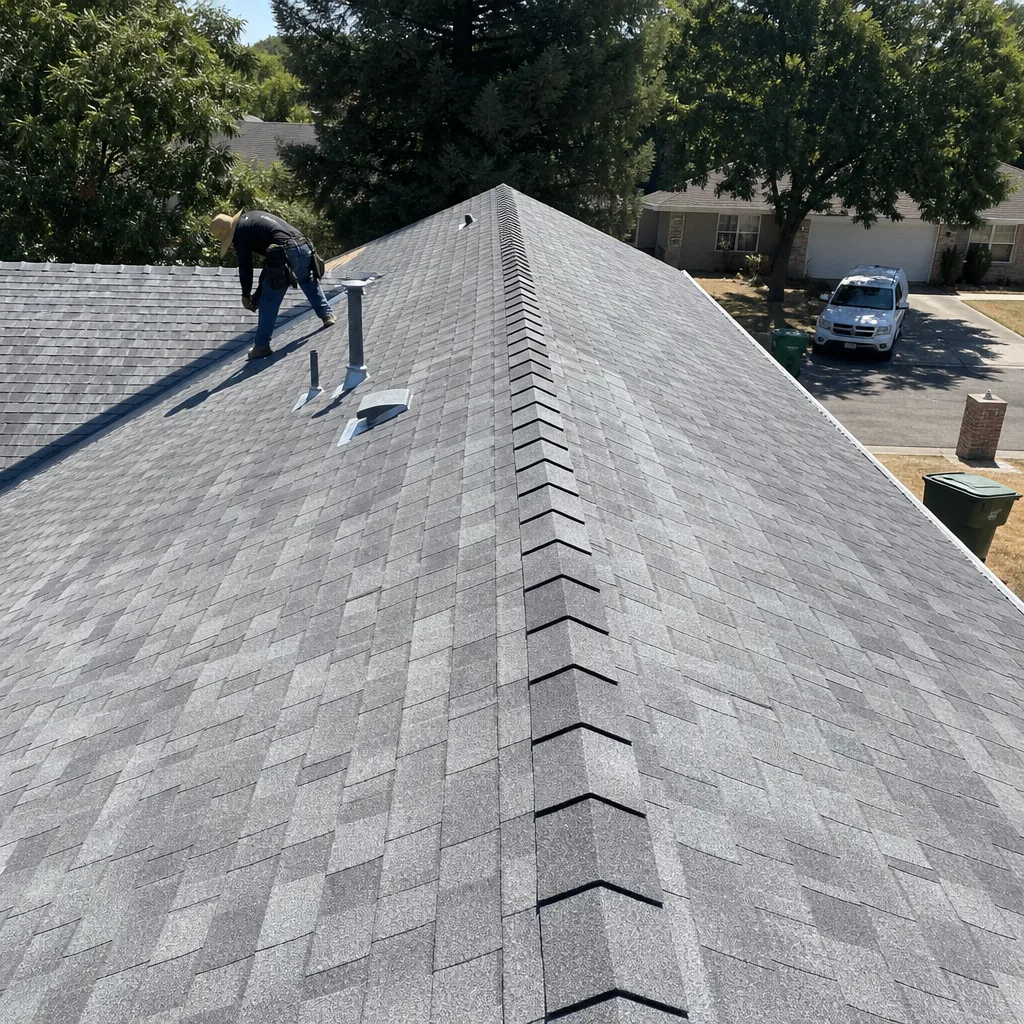 After
After