
Last updated October 17, 2026
 Metal roofing
 Architectural shingles
 Tile roofing
 GAF
GAF Owens Corning
 Flat & low-slope
Free roof inspection with deck photos before we talk money - GAF and Owens Corning certified installation
Roofing Warning Signs: A Fresno Homeowner’s Reference Guide
The dark stain on your ceiling isn’t where your roof is leaking. Water travels along rafters and roof decking before it drips, sometimes ten feet from the actual breach. Starting your inspection at the ceiling stain sends most Fresno homeowners to the wrong spot, and by the time the drip shows up, the real damage has usually been happening for months. This guide walks you through the warning signs that show up early, where to look for them, and how to tell the difference between something you can watch and something that needs a call this week. For a deeper dive, see The Complete Guide to Roofing in Fresno. Most roof failures in the Fresno climate give visible warning for 12 to 24 months before they become emergency leaks. The catch is knowing where to look.
Styles & brands we work with
Quick Answer
The most common roof warning signs in Fresno are granule buildup in gutters during late summer, shingles that cup or curl at the edges, dark streaks on ceilings that appear days after rain rather than during it, and attic sheathing that looks water-stained around nail heads. Ceiling stains almost always indicate a leak that started somewhere higher on the roofline, so checking the attic above and upslope from the stain is the fastest way to find the actual entry point. Interior signs like peeling paint near ceiling corners and musty smells in upstairs rooms can appear 12 to 24 months before water ever drips through.
Table of Contents
- Your Interior Inspection: Room-by-Room Warning Signs
- Attic Warning Signs Most Homeowners Miss
- Exterior Warning Signs Specific to Fresno’s Climate
- Tile Roof Warning Signs in Fresno’s Older Neighborhoods
- Phone Camera Techniques to Inspect Without Climbing
- A Simple Severity Scale: Monitor, Schedule Soon, Call This Week
- What Roof Repairs Cost in Fresno
- A Safety Note Before You Inspect
- Common Mistakes to Avoid
- When to Call a Professional
- Frequently Asked Questions
- The Bottom Line
Your Interior Inspection: Room-by-Room Warning Signs
Most Fresno homeowners check their ceilings after a rainstorm and call it done. That catches leaks, but it misses the slower signs that show up months before water ever pools enough to drip. Walk through each room with a flashlight, even on dry days. Look at the walls and ceilings at an angle, not straight on. Grazing light from a flashlight held flat against the wall reveals discoloration you’d never notice in normal lighting.
Ceilings: What to Look For
A brown or copper-colored ring on a ceiling is an active leak. A yellowish stain that fades and returns with the seasons is a slower, intermittent leak, often tied to a crack that opens when temperature swings expand and contract the roofing materials. Stains that appear days after rain, rather than during it, usually mean water is pooling somewhere and releasing slowly. This is common with flat or low-slope sections of Fresno roofs, where water has time to sit after a storm passes.
Walls: The Overlooked Indicator
Peeling paint or bubbling drywall near the top of an interior wall, especially where the wall meets the ceiling, often means water is running down the inside of the wall cavity. By the time it shows on the wall surface, the drywall has absorbed enough moisture to separate from the paint. Baseboard stains in an upstairs room can mean water traveled down from a roof penetration, like a vent pipe or chimney flashing, and followed the framing to the floor. None of these are problems to ignore, but none of them mean the roof needs replacing today either. They mean the roof needs attention on a timeline you can plan for.
Windows and Door Frames
Soft spots around window frames on upper floors, or doors that suddenly stick in their frames during rainy weeks, are signs that moisture is getting into the framing. Wood swells when it absorbs water. A door that only sticks after storms is a more useful warning sign than a door that always sticks. The same applies to window sashes that feel tighter in winter, when Fresno gets most of its rain.
Attic Warning Signs Most Homeowners Miss
The attic is where roof problems announce themselves earliest, but most Fresno homeowners never go up there. Attic inspections catch 80% of roof issues before they show up inside the living space. Here’s what to look for when you do.
Sheathing Stains Around Nail Heads
Look at the underside of the roof deck, the plywood or OSB you see when you look up. Dark circles or streaks around the nail heads that hold the decking to the rafters are usually condensation, not a roof leak. Warm, moist air from the house rises into the attic, hits the cooler roof deck, and condenses around the metal nails, which cool faster than the wood. This is a ventilation issue more than a roofing issue, but it matters: sustained condensation rots decking from the inside, and the fix often involves ridge vents or added soffit ventilation. If the staining is widespread across the entire underside of the deck, suspect ventilation. If it’s concentrated in one area, suspect a leak above that spot.
Daylight Through the Decking
On a bright day, turn off any attic light and let your eyes adjust for a minute. Look up. If you see pinholes of daylight through the decking, you’re seeing gaps where roof fasteners have backed out or where materials have shifted. Each pinhole is a potential water entry point. This is more common on older Fresno homes where the original roof was installed before current fastener standards.
Damp Insulation
Fiberglass insulation that feels damp or clumped, or that shows water rings on the kraft paper backing, tells you water got in at some point. Check the framing members around the damp area. If the wood is soft enough to dent with a screwdriver, the leak has been active for a while. If the wood is solid and the insulation is dry now, the leak may have been a one-time event, like a wind-driven rain from a specific direction, but you still want to find the entry point.
Rust on Fasteners or Straps
Galvanized metal should not rust in a dry attic. Rust on roof fasteners, hurricane straps, or vent pipes means moisture is present regularly. Track where the rust is most concentrated, then look directly above that spot on the decking. The rust pattern points to the leak location, often more accurately than the stain on your ceiling ever will.
If going into the attic isn’t something you’re set up for, that’s exactly what a roof repair inspection in Fresno starts with. We check the attic before we ever put a ladder on the house.
Exterior Warning Signs Specific to Fresno’s Climate
Fresno roofs fail differently than roofs in coastal California or the Pacific Northwest. We get 100-degree summer days for weeks at a time, then cool nights. That daily temperature swing, often 30 to 40 degrees, expands and contracts roofing materials in a way that steady climates never do. The result is a set of warning signs that are specific to the Central Valley, and they show up on the outside of the roof first. Our Seasonal Roofing Care for Fresno: Year-Round Homeowner’s Guide breaks down what to check each season.
Granule Accumulation in Gutters
Every asphalt shingle roof loses granules over time. A small amount in the gutters after installation is normal. What’s not normal is the pattern you see after a Fresno summer: gutters with a heavy layer of granules at the downspout end, and shingles that look shiny or smooth on the south and west-facing slopes. Heat accelerates granule loss. The south-facing side of a Fresno roof can lose granules 30 to 40% faster than the north side. Check your gutters in September. If the granule buildup is thick enough that you can scoop it with your hand, the shingles have already lost significant UV protection, and the underlying asphalt is now exposed to the sun. That’s when shingles start to crack and curl.
Shingle Cupping and Curling
Cupping happens when the top surface of a shingle shrinks faster than the bottom, making the edges curl upward. It’s caused by the temperature differential between the hot shingle surfaceand the cooler underside against the deck. Fresno’s intense sun on the top side and cooler attic air on the bottom side creates exactly this condition. Curled shingle edges catch wind, which is a problem during the valley’s occasional high-wind events. More importantly, the curled edge exposes the sealant strip underneath, breaking the shingle’s water-shedding seal. A roof with widespread cupping across a slope is a re-roof candidate within two to three years, not a repair item.
Loss of Granule Color Uniformity
Look at your roof from the street on an overcast day, when there’s no glare. If sections of the roof look lighter or more washed out than others, those sections have lost more granules. The lighter areas are where the fiberglass mat is starting to show through. This pattern difference across slopes, usually south and west slopes lighter than north and east, is a strong signal of heat-accelerated aging. It means the roof is aging unevenly, and the lighter sections will fail first.
Flashing Separation at Penetrations
Every pipe, vent, skylight, and chimney that comes through the roof has flashing, metal that directs water around the penetration. Fresno’s heat cycles make the sealant at flashing joints dry out and crack. Look for visible gaps between the flashing and the pipe or the flashing and the shingles. You can often see these from the ground with binoculars or a phone camera zoomed in. Dark caulk lines that have pulled away from the metal are an early sign that the flashing is losing its seal. This is a repair item, not a watch item, because a failed flashing seal leaks directly into the attic every time it rains.
When homes in Fresno need a full replacement, the process starts with a written price before any work begins. Our team at Birchbark Roofing Fresno handles roof replacement the same careful way we handle repairs, with shoe covers at the door and a clean-up photo before we leave.
Tile Roof Warning Signs in Fresno’s Older Neighborhoods
Fresno’s older neighborhoods, Tower District, the areas around Fresno High, much of Old Fig Garden, are full of tile roofs. Tile gets marketed as a 50-year roof, and the tile itself can last that long. What doesn’t last that long is the underlayment beneath the tile, and the mortar at the ridges and hips. Here’s what to watch for on tile roofs specifically.
Cracked or Missing Mortar at Ridges
The ridge line is the highest point of the roof, and it’s capped with tile set in mortar. That mortar takes the full brunt of Fresno’s sun and heat. Over time it dries, shrinks, and cracks. Once the mortar cracks, the ridge tiles loosen. A loose ridge tile becomes a projectile in a windstorm, but before that, the cracked mortar lets water run into the space under the tile. Go outside after a rain and look at your ridge line. If you see dark, damp-looking streaks running down from the ridge, the mortar is letting water in. This is a schedule-soon repair: it’s inexpensive compared to what happens if ridge tiles start coming off.
Slipped or Shifted Tiles
Tile roofs depend on each tile overlapping the one below it. When a tile slips or shifts by even an inch or two, the overlap is broken, and water can reach the underlayment. From the ground, look for tiles that sit at a different angle than their neighbors, or tiles that have slid down and left a gap above them. Wind, foot traffic from satellite installers or solar crews, and the gradual settling of the underlying battens all cause tile slippage. A slipped tile at the eave can also indicate a failed batten, which means the tile is no longer secured to anything.
Degraded Underlayment Visible at Eaves
This is the one most Fresno homeowners never notice. Stand at the edge of your roof and look up under the first course of tile at the eave line. What you’re looking at is the underlayment, the waterproof membrane that sits between the tile and the roof deck. On an older tile roof, you may see pieces of underlayment peeling, cracking, or hanging down. Underlayment wears out long before the tile does. When you can see visible breakdown at the eaves, the underlayment is likely degraded across most of the field of the roof, even where you can’t see it. This is the single most common reason a tile roof in Fresno needs replacement when the tile itself still looks fine from the street. The underlayment is the real roof. The tile is the armor. Armor without a shield underneath it still leaks.
Most Fresno roofing companies will give you a verbal estimate. We do it differently. Every job from our Fresno roofing company gets a written price in dollars before any work starts, and that price never changes on you unless we find something we show you and you approve first.
Phone Camera Techniques to Inspect Without Climbing
Climbing on a roof is dangerous. Falls from roofs happen every year in Fresno, and most of them are homeowners checking a leak. You don’t need to climb. Your phone camera gets you 90% of the visual information a roofer gets, with none of the risk. Here’s how to do it well.
Step 1: Shoot from the Street
Stand across the street from your house and take a series of photos with your phone at 2x to 3x zoom, panning slowly across the entire roof. Do this on an overcast day or in the morning before the sun hits the south slope, so you’re not fighting glare. The goal is a set of overlapping photos you can zoom into on your phone later. Flag anything that looks out of place: a shingle edge that catches the light differently, a tile sitting askew, a dark spot that doesn’t match the surrounding material.
Step 2: Use the Eaves from the Ground
Stand directly under the eave line and shoot upward at a low angle. This shows you the drip edge, the first course of shingles or tiles, and the underlayment if you have a tile roof. The drip edge is a metal flashing that directs water into the gutter. If it’s bent, rusted through, or missing sections, water is getting behind the fascia every time it rains.
Step 3: Zoom into Gutter Runs
Position yourself where you can see down into the gutters, either from a ladder (never climb onto the roof itself) or from a second-story window. Zoom in and look for granule buildup, standing water, or sections of gutter that have pulled away from the fascia. Standing water in a gutter after dry weather means the gutter is sagging or the downspout is clogged, and either condition puts water back against the fascia board and eventually into the roof edge.
Step 4: Check the Chimney and Pipes from Below
If you have a chimney, shoot up at it from two angles, front and side. Look at the flashing where the chimney meets the roof. Cracks in the mortar cap, or flashing that has separated from the brick, are visible from the ground with a zoom lens. Same for vent pipes: look for the rubber boot that seals the pipe. If the rubber looks cracked, dry, or pulled back from the pipe, that’s a leak waiting for the next rainy season.
These phone techniques work because Fresno’s clear, bright light gives high-contrast photos. You’ll see detail on a phone screen that you’d miss with binoculars.
A Simple Severity Scale: Monitor, Schedule Soon, Call This Week
Not every roof warning sign is an emergency. Treating every minor sign as a five-alarm fire leads to unnecessary repairs. Ignoring every sign leads to decking rot. Here’s a simple framework used by professional roofers in Fresno to classify what they find.
Monitor (Check again in 30 to 60 days)
- Light granule loss in gutters (a sprinkle, not a scoop)
- One or two shingles starting to cup slightly, with no other signs
- Minor color variation between slopes, no visible cracking
- Attic insulation that’s dry but shows faint water rings from an old leak
- A single tile that’s shifted less than an inch and isn’t above a living space
These are early-warning signs. You have time to research, get estimates, and plan. Recheck in a month or two. If the condition has changed, move it up the scale.
Schedule Soon (This month or next)
- Heavy granule accumulation in gutters on one side of the house
- Multiple shingles cupping or curling across a slope
- Cracked mortar at ridge tiles, no tiles missing yet
- Flashing separation at a chimney or vent pipe
- Ceiling stains that are dry but visible, meaning the leak stopped but wasn’t fixed
- Any visible underlayment degradation at tile roof eaves
None of these are emergencies today, but all of them become more expensive the longer they wait. Schedule an inspection, get a written quote, and plan the repair on your timeline. You have a few weeks, not months.
Call This Week
- An active leak, meaning water is currently entering the house or the ceiling stain is damp
- Multiple slipped tiles after a windstorm, exposing underlayment to direct rain
- A section of shingles that has peeled back, leaving the deck exposed
- Any sign of decking rot visible from the attic
- Water stains around a skylight or chimney on the interior
- Mold on attic sheathing that’s spreading
These conditions don’t improve on their own, and each rainstorm makes them worse. In Fresno’s wet season, from November through March, a small active leak can saturate insulation and drywall in a single storm. The damage multiplies fast.
What Roof Repairs Cost in Fresno
Most residential roof repairs in Fresno run between $350 and $1,200. A flashing reseal at a vent pipe is on the low end. Ridge mortar repointing on a tile roof is mid-range. Decking repair from a long-running leak can push past $2,000 because we’re replacing wood, not just roofing material. Full re-roofs in Fresno run from $9,000 to $18,000 for a typical single-family home, depending on size, pitch, material, and the condition of the existing decking. Here’s a line-item breakdown of the most common repairs we quote in Fresno:
- Vent pipe boot replacement: $180 to $350
- Flashing reseal at chimney or skylight: $400 to $900
- Single shingle replacement: $150 to $300
- Ridge mortar repointing (tile roof): $800 to $1,800 depending on linear feet
- Tile replacement, 5 to 10 tiles: $300 to $700
- Decking repair, 2 to 4 sheets: $600 to $1,500
Every number above is a range. What you’ll actually pay depends on the condition of the surrounding roof, access, and what we find when we open things up. That’s why we give every customer a written price in dollars before any work starts. Not an estimate you have to trust. A number on paper, before we begin, that covers the work we described. If we find something unexpected, we stop, show you what we found, and get your approval on the new number before we touch it. That’s how the Birchbark Roofing Fresno home standard operates on every single project, from a one-tile patching job to a full roof replacement.
A Safety Note Before You Inspect
Roof inspections from the ground, or from inside your attic, are safe. Climbing onto a roof is not. Roof falls are among the most common serious home injuries, and Fresno’s steeper roof pitches only add to the danger. Tile roofs are worse: tiles crack under foot traffic, they’re slick with dust and morning dew, and a cracked tile you’re standing on can give way. If you need to see something closer than your phone camera can show you, that’s the point where a professional inspection is the safe choice. Commercial roofers use safety harnesses, proper ladder tie-offs, and training. Please don’t put yourself on your roof to save an inspection fee. The inspection isn’t where the cost of roof repair lives.
When our crew works on roofs in Fresno neighborhoods, we follow the C.A.R.E. values by name, developed as part of the Cedarwell Care Promise. We clean up like it’s our own home. We ask before we move or touch anything. We respect your family’s time and quiet hours. We explain the price before the work. And we do it all in uniform, with background-checked technicians, because you should know exactly who’s walking through your door and onto your roof. Shoe covers go on at the door. Drop cloths go through the hallway. A photo of the completed clean-up goes to you before the crew leaves. That’s not a special request. That’s the default.
Common Mistakes to Avoid
- Starting your inspection at the ceiling stain. Water travels. The stain tells you where water left the roof deck, not where it entered. Start in the attic above the stain, then look upslope. In Fresno, where most roofs have a single dominant slope toward the street, leaks on the ceiling near the back wall often start near the ridge at the opposite side of the house.
- Waiting until the rainy season to inspect. By November, the dry rot has been growing for six months. Fresno’s long dry season is the ideal time to find and fix roof issues, when materials are dry and repairs set properly. Schedule inspections in late summer or early fall, after the heat has done its worst and before the rains start.
- Ignoring shingle granules because the roof still looks fine from the street. Granules are the UV shield for the asphalt underneath. Once they’re gone, the shingle fails fast. If your gutters fill with granules every September, the roof is aging faster than its calendar age suggests.
- Painting over a ceiling stain without finding the leak. Kilz covers the stain. It doesn’t stop the water. The stain comes back, and meanwhile the decking above it keeps rotting. Find the leak first, fix it, then paint.
- Assuming a tile roof doesn’t need maintenance. Tile lasts 50 years. Underlayment lasts 20 to 30. The tile on a 1995 home looks fine. The underlayment underneath it is at end of life. If your Fresno home is 25 years old or older and still has its original tile roof underlayment, get an attic inspection.
- Replacing a roof based only on exterior condition. The roof deck, the ventilation setup, and the insulation all factor into whether a new roof will perform. A roof replacement quote should include an attic inspection. If a roofer quotes you without ever going into the attic, they’re pricing the surface, not the system.
When to Call a Professional
Call a professional if you see any sign on the “Call This Week” list: an active leak, exposed decking, widespread tile slippage, or mold spreading in the attic. Call if your phone camera inspection reveals conditions you can’t confidently classify. And call if you’re planning to sell your home within the next two years, because a documented roof inspection, even one that finds issues, gives you time to address them before they become a negotiation point in escrow. Birchbark Roofing Fresno offers free inspections in Fresno, and a live person answers the phone 24/7. Call (559) 785-9461 and we’ll set up a time to walk the roof and the attic with you, then put every recommendation in writing.
Frequently Asked Questions
A roof inspection in Fresno is free with Birchbark Roofing. We walk the roof, inspect the attic, and give you a written report of what we find, no charge and no obligation. Most Fresno roofing companies offer free inspections, but few include the attic check that catches the early warning signs this guide covers. Call (559) 785-9461 to schedule yours.
An asphalt shingle roof in Fresno typically lasts 15 to 20 years, which is shorter than the national average because of the intense summer heat. Tile roofs can last 50 years or more, but the underlayment beneath the tile typically needs replacement every 20 to 30 years. If we can inspect your attic, we can tell you where your roof is in its lifespan.
The price won’t change unless we find something you didn’t know about, and we’ll show you proof before we ask for approval. Every Birchbark job starts with a written price in dollars. If we open up a section of roof and find rotted decking or failed underlayment, we stop work, take photos, show you what we found, and get your signature on a change order before proceeding. You never get a surprise bill at the end.
Yes, you can inspect most of your roof from the ground using your phone camera at 2x to 3x zoom, plus an attic inspection with a flashlight. The techniques in this guide, shooting from the street, shooting upward at eaves, checking gutters from a ladder, will catch the majority of early warning signs. If you see something that concerns you, call us and we’ll do a professional inspection for free.
Touch it. If the stain is damp, or if it feels cool to the touch on a warm day, the leak is active or recent. If the stain is dry, crumbly, and the same color throughout, it’s old. Mark the edges of any stain with a pencil line. If the stain grows past the pencil mark after the next rain, you have an active leak that needs attention now, not later.
Yes, we pull permits for every roof replacement in Fresno. The city requires a permit for re-roofing, and we handle the paperwork, schedule the inspections, and close out the permit so your roof is legal and documented. It’s part of the job, not an add-on, and it protects you when you sell the house.
The Bottom Line
Roof failures in Fresno give warning, and the warning signs follow a pattern. Heat speeds up granule loss and shingle cupping. Temperature swings crack flashing sealant and ridge mortar. Underlayment fails before tile does. And water travels far from its entry point before it ever shows up on a ceiling. The homeowners who catch problems early are the ones who check their gutters in September, their attics in the spring, and their ceilings after every rain. You don’t need to be a roofer to see the signs. You need to know where to look, phone in hand, and when a sign is worth a phone call. Call (559) 785-9461 whenever you’re unsure. We’ll tell you straight whether it’s something to watch or something to fix, and you’ll get the answer in writing, free.
Written by Erik Lindgren, Owner at Birchbark Roofing Fresno, serving Fresno since 2000.
See the difference
 Before
 After
After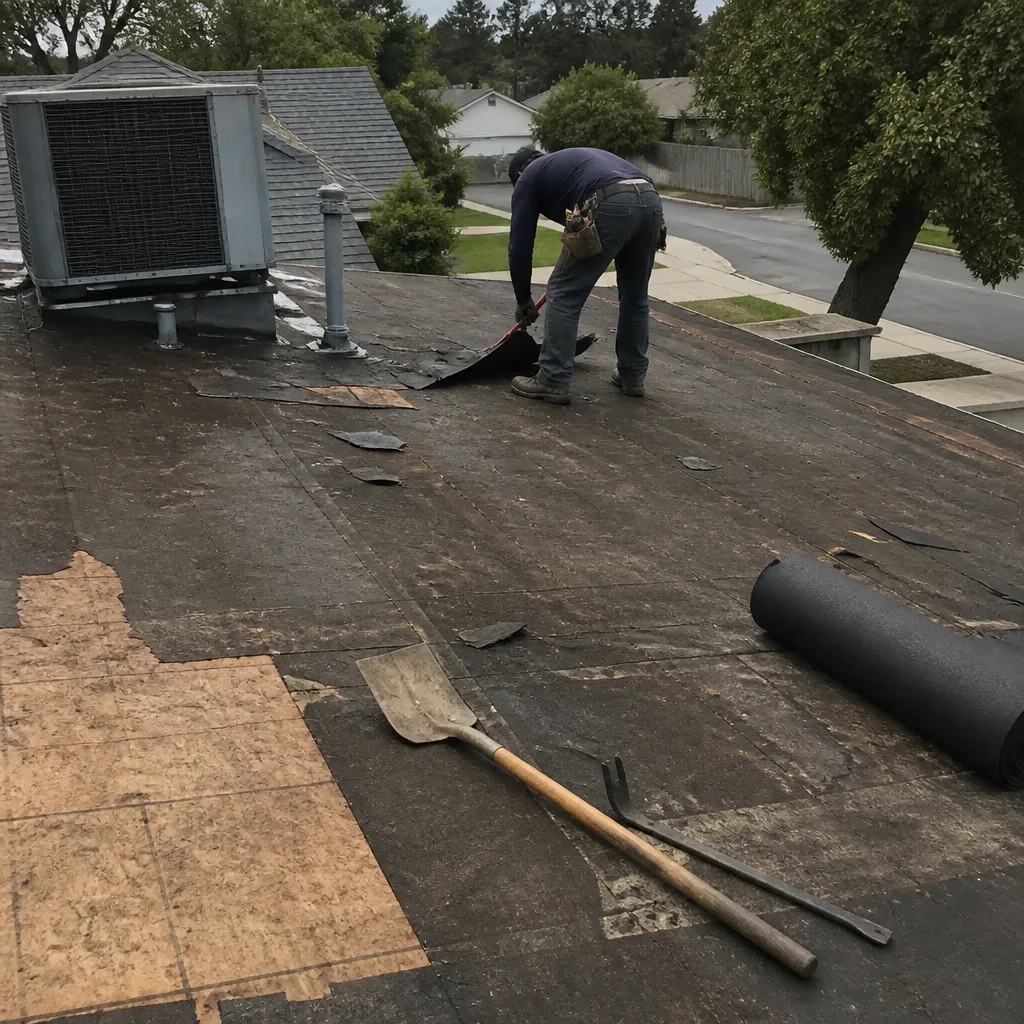 Before
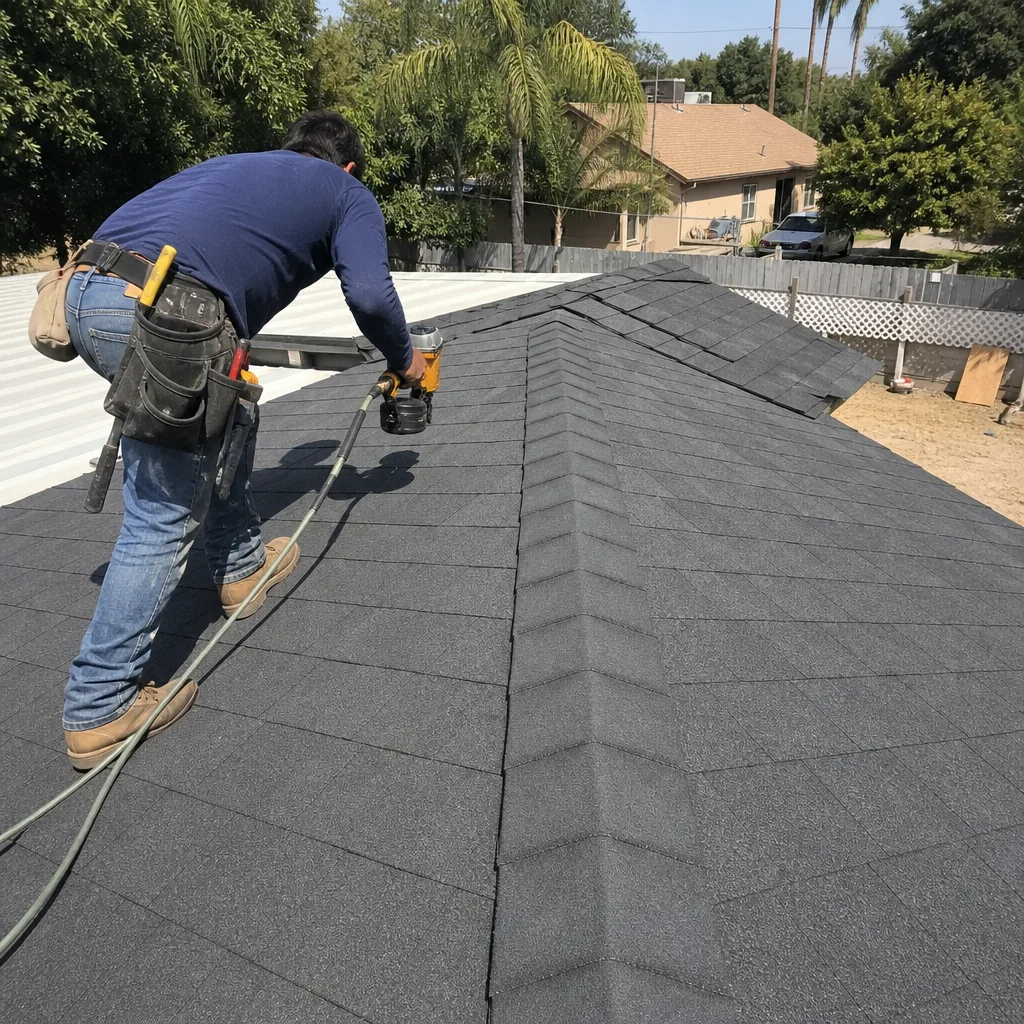 After
After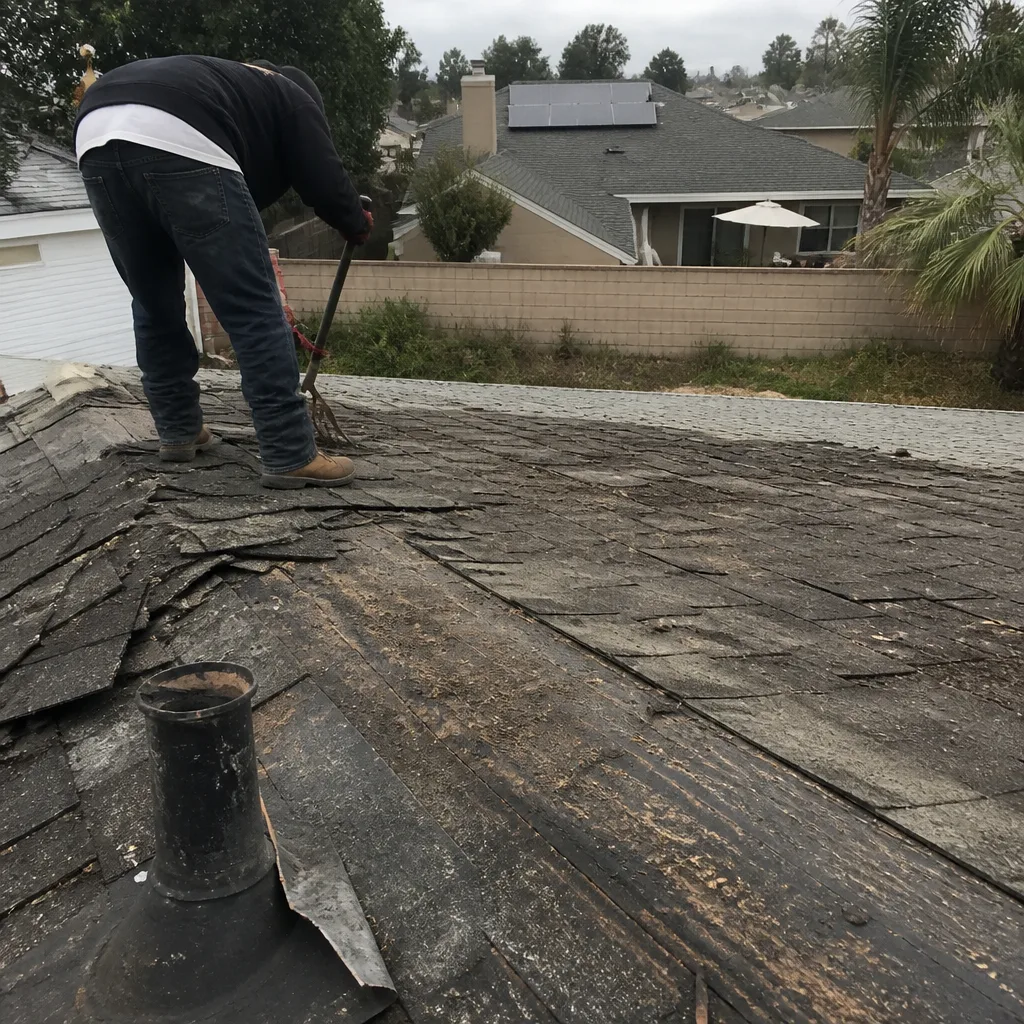 Before
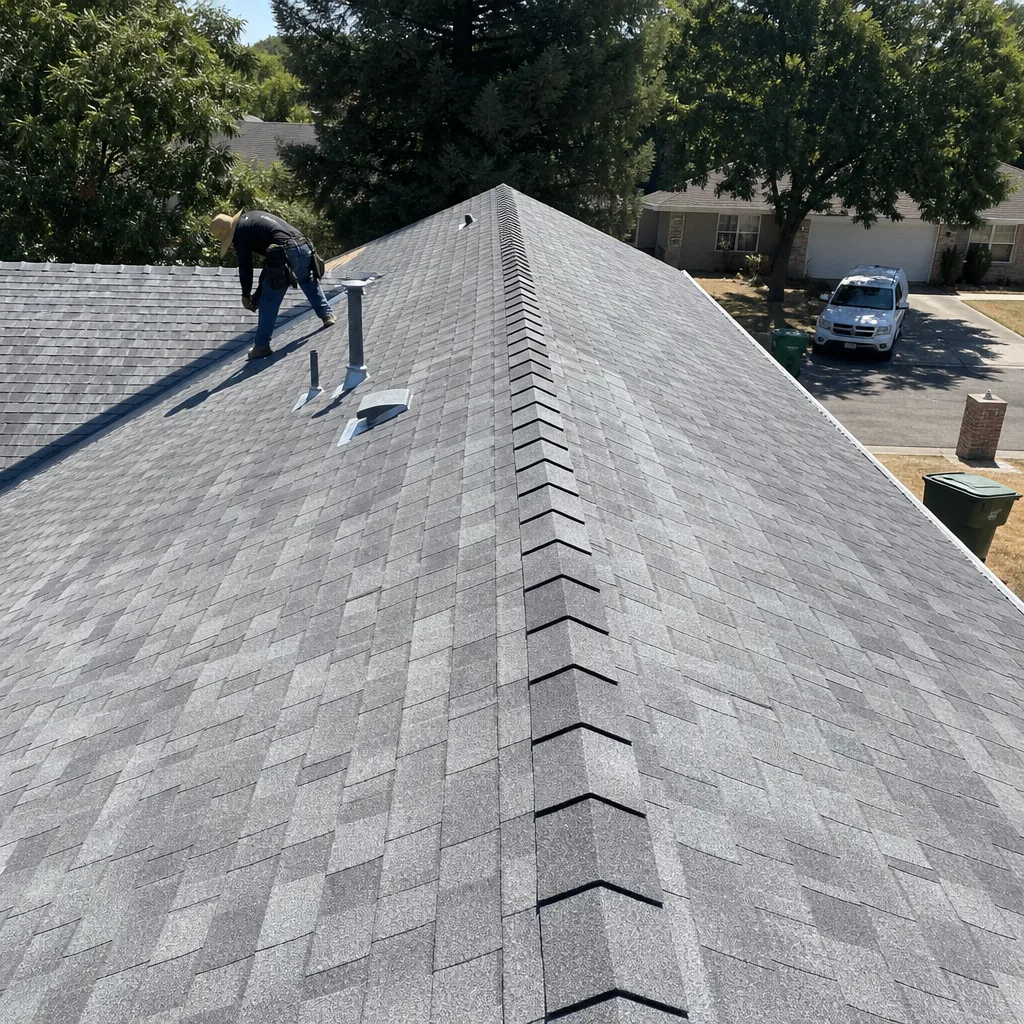 After
After